Project Summary
The problem: A healthcare organization struggled with delays in referring patient safety event reports to its Safety Event Review Team (SERT). Inconsistent screening procedures, unclear follow-up responsibilities, and limited visibility into reports contributed to an average referral time of 18 days.
Using Kure's AI-powered process improvement platform, the organization streamlined its safety event referral workflow, reducing average referral time from 18 days to 6 days, a 67% improvement, while strengthening accountability and supporting more timely patient safety reviews.
Introduction
In healthcare, every day matters when addressing patient safety concerns. Delays in reviewing reported incidents can prevent organizations from identifying risks, gathering important information, and taking action to prevent similar events.
Recognizing the need for a faster, more consistent referral process, a healthcare organization combined GLSS’s Lean Six Sigma Green Belt Training & Certification with Kure's AI-powered process improvement platform to identify inefficiencies and develop practical solutions.
By applying Lean Six Sigma's DMAIC methodology (Define, Measure, Analyze, Improve, Control) through Kure, the project team gained a clearer understanding of how safety reports moved through the organization and where unnecessary delays occurred.
The project also reflected GLSS's commitment to Ethical Efficiency™, prioritizing patient well-being, employee support, and timely safety reviews alongside operational improvements.
The Problem
The healthcare organization experienced challenges with its safety event referral process, with reports taking an average of 18 days to reach its Safety Event Review Team (SERT).
Without standardized screening criteria, clear follow-up responsibilities, or a reliable process for reassessing reports when severity levels changed, safety concerns could remain unresolved longer than necessary.
These delays made it harder to gather complete information while details were still fresh and limited opportunities to address potential safety risks promptly.
Improving the process was essential to accelerating safety reviews, supporting healthcare professionals, and creating a more responsive system focused on patient well-being.
The Root Causes
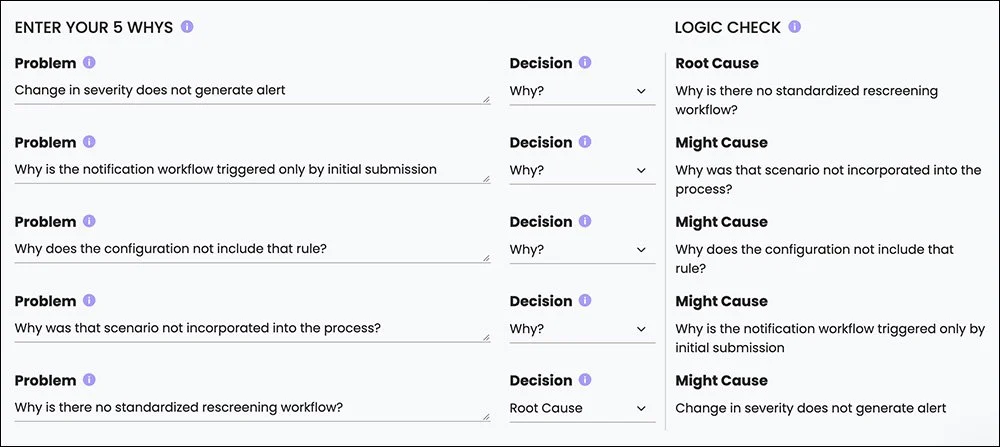
Using Kure's process mapping and root cause analysis tools, the team examined the existing referral workflow and identified several opportunities for improvement:
Inconsistent Screening: Reports lacked standardized criteria for determining when additional SERT review was necessary.
Unclear Follow-Up Ownership: Reports requiring additional information did not always have clearly assigned responsibilities.
Missing Reassessment Procedures: Changes in an event's severity did not consistently trigger another eligibility review.
Limited Workflow Visibility: Without consistent alerts and tracking, reports requiring attention could experience unnecessary delays.
These findings helped the team understand where improvements would have the greatest impact on referral timeliness and process reliability.
The Solutions
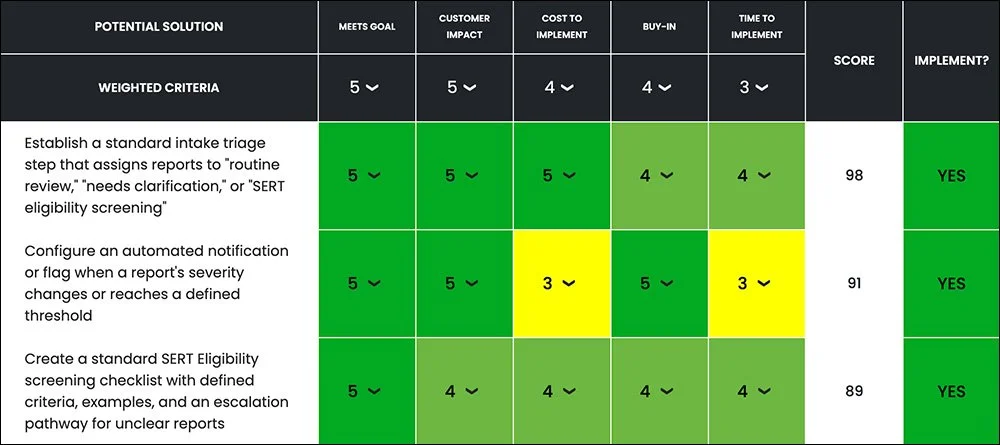
Applying the practical problem-solving skills developed through GLSS's Green Belt Training, the team used Kure to map its current process, identify opportunities to eliminate delays, and design an improved workflow with clearer responsibilities and standardized procedures.
The team implemented several targeted solutions:
Standardized Report Screening: Established clear intake categories for routine reviews, reports needing clarification, and SERT eligibility screening.
Automated Notifications: Introduced alerts to identify reports when event severity changed or reached a defined threshold.
Consistent Eligibility Criteria: Developed a standardized screening checklist with clear requirements and escalation guidance.
Assigned Follow-Up Responsibilities: Established designated owners and deadlines for reports requiring additional information.
Daily Monitoring: Created a work queue to track reports with severity changes and ensure timely reassessment.
By documenting the existing and improved workflows in Kure, the team established a structured approach to managing changes and supporting ongoing process improvement.
The Results
The improved referral process delivered measurable results, helping the organization respond to patient safety concerns more efficiently.
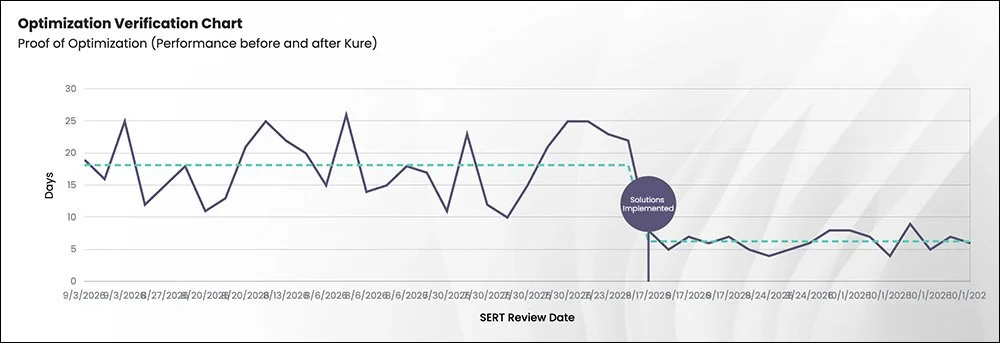
Average Safety Event Referral Time:
Before: 18 days
After: 6 days
Improvement: 67%
By reducing average referral time by 12 days, the organization significantly accelerated the movement of safety event reports to the appropriate review team.
The redesigned workflow also provided additional operational benefits:
Improved consistency in screening and referral decisions.
Clearer accountability for reports requiring follow-up.
Greater visibility into safety events requiring reassessment.
More timely access to information for patient safety reviews.
These improvements created a more reliable process while supporting the organization's commitment to proactive patient safety.
Conclusion
By combining GLSS's Lean Six Sigma Green Belt Training & Certification with Kure's AI-powered process improvement platform, the healthcare organization transformed a delayed and inconsistent safety event referral process into a more streamlined, accountable workflow.
GLSS's practical, results-driven training equipped the team with essential problem-solving skills, while Kure's intuitive process mapping, root cause analysis, and project documentation tools helped turn those skills into measurable improvements.
With a 67% reduction in average referral time, the organization demonstrated how training and technology work together to accelerate results while supporting safer, more responsive patient care.
The successful project positions the organization to sustain its gains, strengthen its safety review practices, and continue identifying opportunities for improvement with GLSS and Kure.
*We value our clients’ confidentiality. While we’ve changed their names, the results are real.