Hospital Reduced Emergency Department Length of Stay By 20% With Kure
PROJECT SUMMARY
Problem: In the fast-paced environment of an Emergency Department (ED), every minute counts. Patients need fast, effective care, and staff need systems that help—not hinder—them. At a hospital in Melbourne, Florida, the average time patients spent in the ED had stretched to 240 minutes. This wasn’t just slowing down care—it was creating backups, frustrating staff, and making it harder to admit new patients.
To turn things around, the hospital team launched a focused improvement project using Kure, an AI-powered process improvement platform. With Kure’s help, they cut the average patient stay by 20%, dropping from 240 to 190 minutes. That’s 50 fewer minutes per patient—an incredible leap forward for both care quality and efficiency.
The Problem
Emergency Departments are critical to patient care, but they also come with big challenges. Long waits, overcrowding, and overworked staff can make it hard to deliver timely care. That’s exactly what was happening in this Florida hospital’s ED.
Delays were impacting everything—from the speed of diagnostic testing to the ability to move patients into hospital beds. Staff were juggling multiple demands, technology was outdated, and communication gaps were making matters worse.
To take on the challenge, a team of professionals—led by a project leader enrolled in Lean Six Sigma Green Belt Training—was assembled. They used Kure’s AI-driven workflow, which follows the proven DMAIC (Define, Measure, Analyze, Improve, Control) approach, to guide them step-by-step through the project. Kure provided examples, data insights, and improvement suggestions, helping the team stay focused on problem-solving and get results up to three times faster.
The Root Causes
With Kure guiding the way, the team got to the heart of the issue. Here’s what they found:
Test results weren’t being reviewed in real time, slowing down treatment decisions.
Staff struggled to document updates because their current system was hard to use.
The hospital was mid-upgrade to a new EHR, which caused confusion and workflow slowdowns.
Lack of real-time communication between team members led to care delays.
Not enough staff during peak hours puts extra pressure on the team.
By identifying these barriers, the team had a clear path forward.
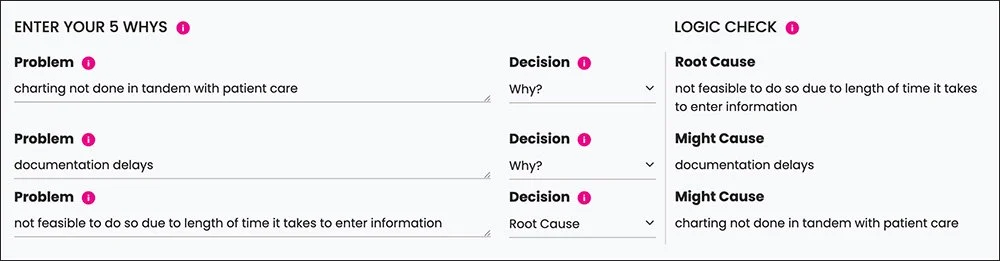
The team used Kure’s 5 Whys tool to dig deep and uncover the true causes of long patient stays—revealing gaps in technology, communication, and staffing.
The Solutions
Armed with Kure’s support, the hospital made several key improvements:
They upgraded to the Epic EHR system, which made it faster and easier for staff to chart and access test results.
They streamlined daily workflows to cut out unnecessary steps.
They trained staff on the new system, ensuring everyone felt confident with the changes.
They improved communication processes, so updates were shared quickly and clearly.
They built change management support into the rollout, helping everyone adjust smoothly.
Each improvement was simple but strategic—and together, they made a big impact.
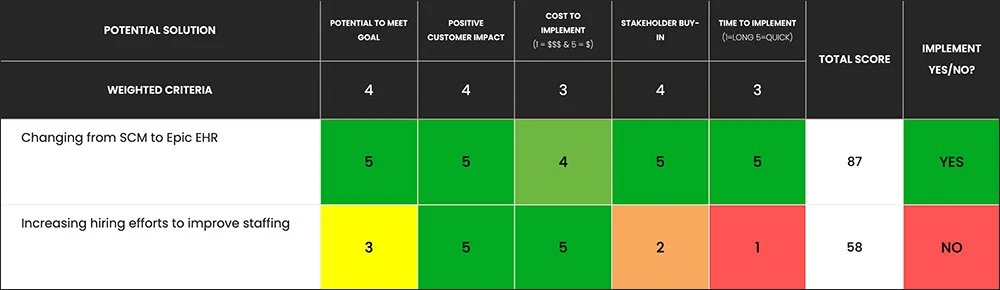
Using Kure’s solution matrix, the team quickly evaluated and prioritized changes like upgrading the EHR system and streamlining workflows.
The Results
The transformation was clear. The average Length of Stay in the ED dropped by 20%, from 240 to 190 minutes.
This led to:
Faster patient treatment
Quicker bed turnover
Less stress on staff
Fewer patients leaving without being seen
Higher patient satisfaction
The team also saw long-term benefits like better morale, stronger teamwork, and improved community trust.
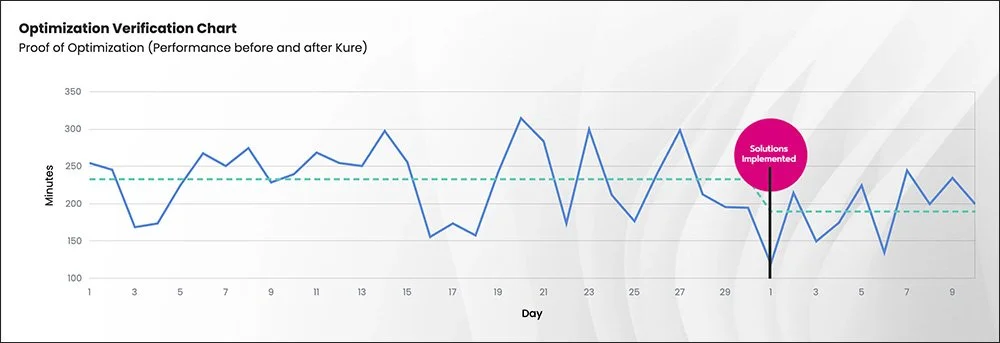
Once changes were in place, Kure’s Verification tool confirmed the success of the project—showing a 20% reduction in LOS and improved patient flow.
Conclusion
By combining the power of Kure’s AI-driven improvement workflow with the dedication of a focused team, this hospital tackled one of its most pressing challenges. Kure made it easier to identify what was going wrong, choose the right solutions, and track real progress.
With a more efficient Emergency Department, patients now get care faster, staff are more supported, and the hospital is positioned for continued success. This project wasn’t just about solving a problem—it was about creating a better future, one improvement at a time.
*We value our clients’ confidentiality. While we’ve changed their names, the results are real.