Hospital Reduced Voicemail Volume By 75% With Kure
PROJECT SUMMARY
Problem: In the healthcare industry, clear and timely communication is essential for providing the best possible patient care. Every minute spent sorting through voicemails takes time away from the people who need it most—patients and their families. However, this St. Louis healthcare organization faced a growing problem: an overwhelming 185 voicemails per week (37 per day), requiring excessive time to check, log, and return each message.
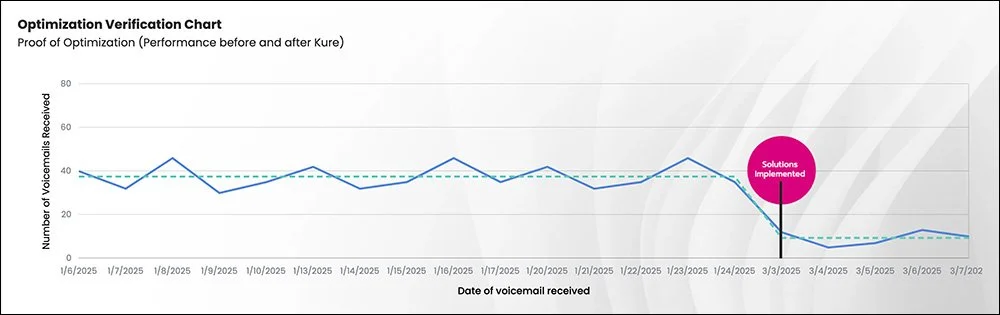
Recognizing the need for a solution, the organization turned to Kure, an AI-powered process improvement software, to analyze the issue and guide them through a structured improvement plan. By following Kure’s AI-driven workflow, the team cut voicemail volume by 75%—reducing daily messages from 37 to just 9 while freeing up staff to focus on patient care.
The Problem
In healthcare, managing high call volumes is critical to maintaining efficient operations. But when communication systems break down, staff members can quickly become overwhelmed, leading to delays, frustration, and excessive administrative tasks that take time away from patient care.
This organization was struggling to keep up with an excessive number of voicemails—185 per week—which meant staff spent valuable hours checking, documenting, and returning calls. Instead of focusing on patient care, employees were stuck in an endless cycle of callbacks, adding stress to their already demanding roles.
These inefficiencies had a ripple effect. Delayed responses led to multiple follow-up voicemails from the same callers, further increasing workload and creating unnecessary bottlenecks. Without a structured approach to managing calls, the problem continued to grow, making it clear that a change was needed.
To tackle the issue, a dedicated team was formed, led by a project leader using Kure’s AI-driven workflow for guidance. Kure’s platform provided step-by-step direction using the DMAIC (Define, Measure, Analyze, Improve, Control) methodology, offering real-time suggestions, best practices, and AI-driven insights to streamline the process and focus on the real problem areas.
The Root Causes
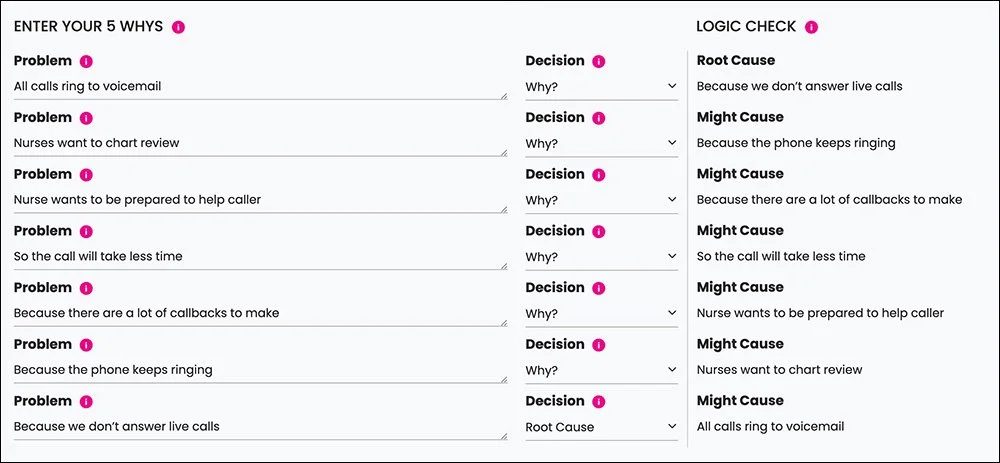
With Kure’s AI-powered analysis, the team quickly identified the primary reasons behind the voicemail overload:
Too many calls were going to voicemail: Staff members were frequently unavailable to answer live calls, forcing patients and families to leave messages instead.
Delayed responses created repeat voicemails: Patients who didn’t receive timely callbacks often left additional messages, further increasing the backlog.
Without a better system for managing incoming calls, these issues compounded, making it difficult to keep up with demand.
The Solutions
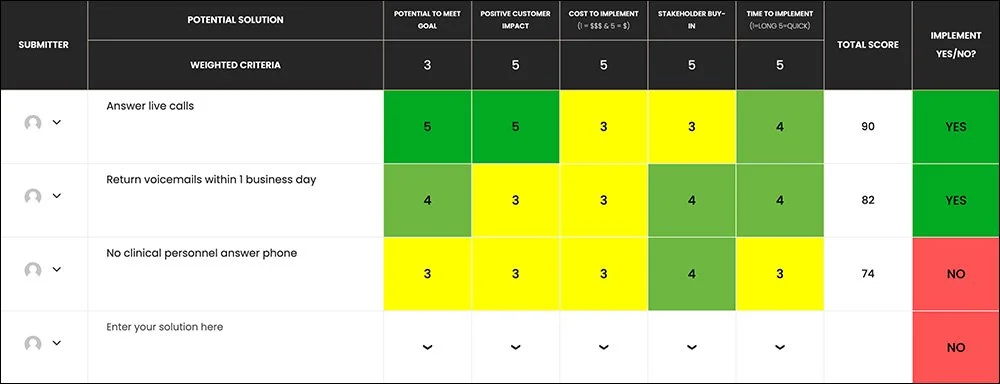
By following Kure’s AI-driven process improvement workflow, the team implemented two key changes that significantly reduced voicemail volume:
Prioritizing live call responses: Kure’s analysis helped the team identify the busiest call times and adjust staffing schedules accordingly. With more calls being answered in real-time, the need for voicemail decreased dramatically.
Structured voicemail follow-up: For messages that did go to voicemail, Kure guided the team in setting up a new policy: all voicemails would be returned within one business day. This prevented repeat messages and kept the backlog under control.
These improvements were implemented quickly, thanks to Kure’s step-by-step guidance, allowing the team to complete the project up to 3 times faster than traditional methods.
The Results
The impact was both immediate and significant:
Voicemail volume dropped from 37 per day to just 9 per day—a 75% reduction.
Staff spent far less time checking and returning calls, allowing them to focus more on patient care.
Faster response times improved communication, reducing frustration for patients and families.
The organization optimized its existing workforce, eliminating the need for additional staff.
With a streamlined process in place, staff were no longer overwhelmed by administrative tasks and could dedicate more time to delivering high-quality care.
Conclusion
By using Kure’s AI-powered process improvement workflow, the organization was able to quickly and effectively reduce voicemail volume, enhance communication, and boost efficiency. Kure’s built-in guidance, real-time AI-driven analysis, and structured approach enabled the team to achieve results up to 3 times faster than traditional problem-solving methods.
This success goes beyond just voicemail reduction. It highlights the power of AI-driven process improvement in creating long-term operational excellence. With a structured framework in place, the organization is now positioned to tackle other efficiency challenges and continue improving the patient experience. Thanks to Kure, the team now has the tools, insights, and confidence to sustain these improvements and build a culture of continuous success.
*We value our clients’ confidentiality. While we’ve changed their names, the results are real.