McKinsey Reports: The Prospective Workforce After the Pandemic
Some of the new work practices prompted by COVID-19 may cease, but many will remain, at least partially.
Jobs with the highest physical proximity are likely to be most disrupted.
COVID-19 has accelerated three broad trends that may reshape work after the pandemic recedes.
COVID-19 may propel faster adoption of automation and AI, especially in work arenas with high physical proximity.
As many as 25 percent more workers may need to switch occupations than before the pandemic.
Companies and policymakers can help facilitate workforce transitions.
Flexible companies quickly adapted as the pandemic forced alternative work approaches – some of which were better than before.
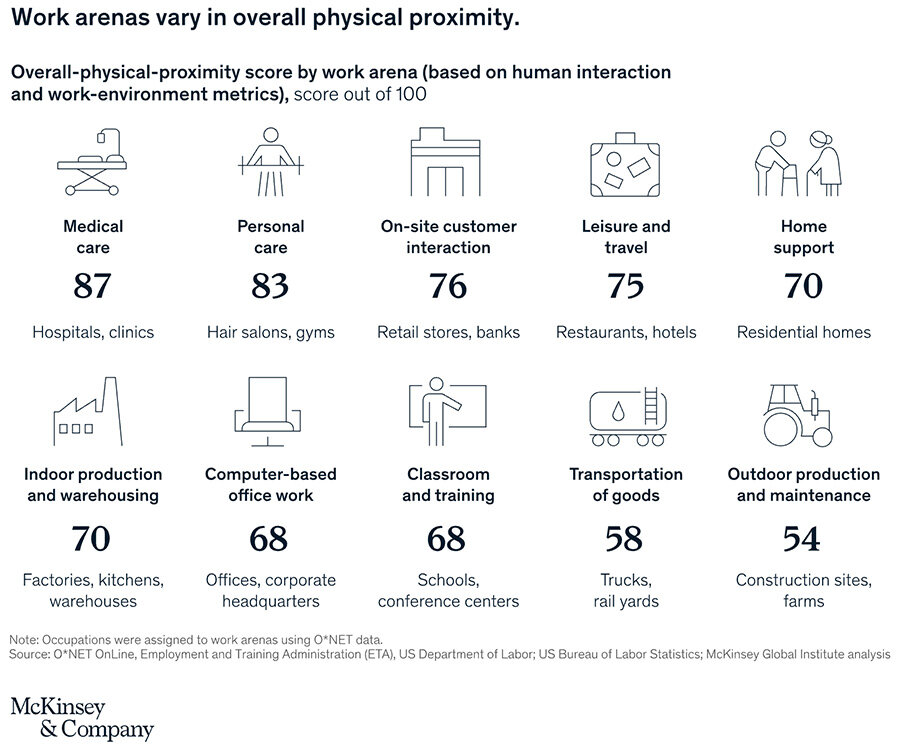
Source: McKinsey & Company