Healthcare Provider Decreased Patient Safety Review Time By 33% With Kure
PROJECT SUMMARY
The problem: The team was missing the required 45-day deadline for safety event cause analyses, putting them at risk of noncompliance and increasing the chance of repeated incidents. With rising event volume and no reliable review system in place, process improvement became essential to protect both patients and the organization.
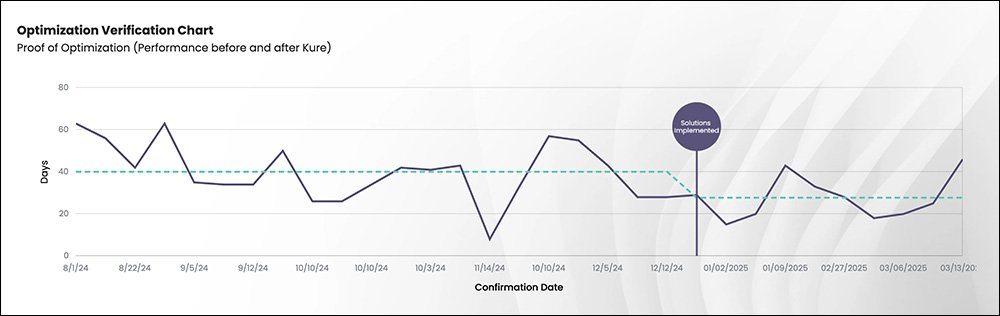
Using Kure, the team reduced the review cycle time from an average of 40 days to just 27 days—a 33% improvement.
The Problem
In healthcare, keeping patients safe is priority number one. When an incident happens, it’s not enough to just respond—teams need to figure out why it happened and how to prevent it from happening again. But when more and more safety events stack up, and deadlines are tight, that’s easier said than done.
One healthcare provider found itself in that exact situation. Safety event reviews were falling behind schedule, and the pressure to meet strict regulatory deadlines was rising. That’s when the team turned to Kure, an AI-powered process improvement platform that uses the proven DMAIC method (Define, Measure, Analyze, Improve, Control) to guide teams step-by-step through solving complex problems.
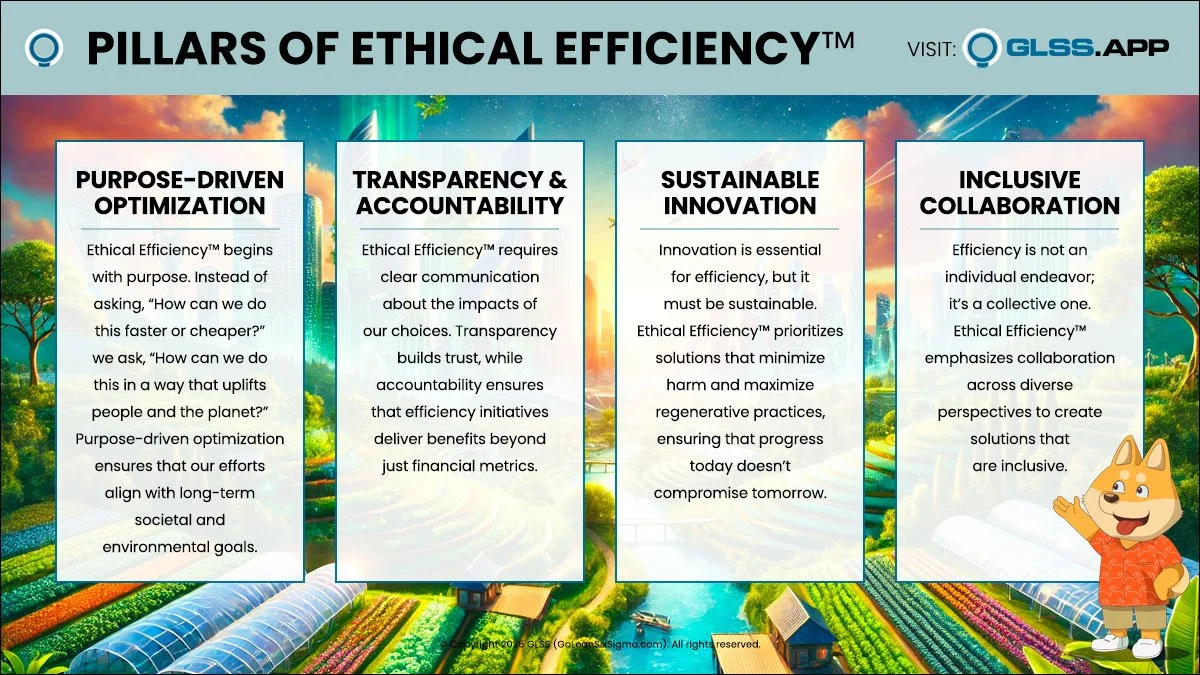
With real-time suggestions, examples, built-in documentation, and AI-driven analysis, Kure helped the team move from Ethical Efficiency™, the team focused on creating a solution that was fair, sustainable, and designed to protect both patients and staff—without cutting corners.
By regulation, safety event cause analyses must be completed within 45 days. But this organization wasn’t consistently meeting that requirement. In fact, five months out of the year, they missed the deadline entirely—putting them at risk of noncompliance and delaying critical improvements to patient care.
The bigger concern? Every delay meant more time before the root cause could be addressed—which raised the chance of the same kind of harm happening again. As the number of safety events increased, the existing review process couldn’t keep up. The team needed to act fast—but in a way that would truly fix the problem for good.
A group of experienced professionals came together, led by a project leader working through Lean Six Sigma Green Belt Training. To keep the project focused and efficient, the team used Kure’s AI-powered platform to walk them through each phase of the improvement process. That allowed them to spend less time organizing their work—and more time actually solving the issue.
The Root Causes
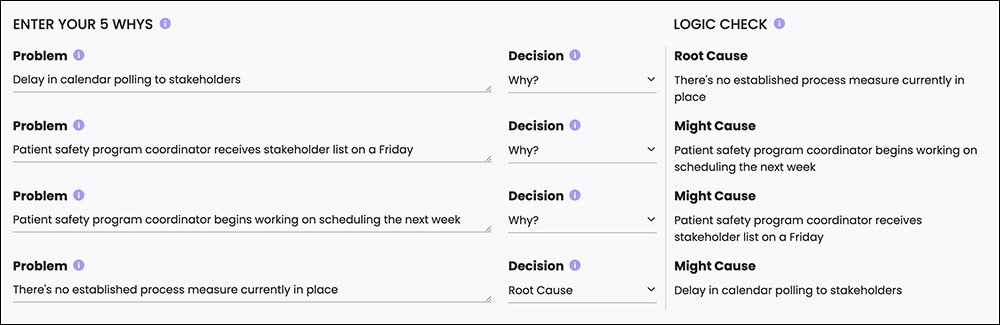
Kure helped the team dig deep into the process and uncover two major issues:
No way to measure the review process: Without tracking how long each case took, delays were often invisible until it was too late.
Scheduling bottlenecks: The review process relied heavily on physicians and trainees, who had packed schedules. This made coordinating meetings difficult and unpredictable.
With no clear visibility and so many moving parts, it was easy for the process to stall. The team realized they needed better coordination, more transparency, and a system to keep things moving.
The Solutions
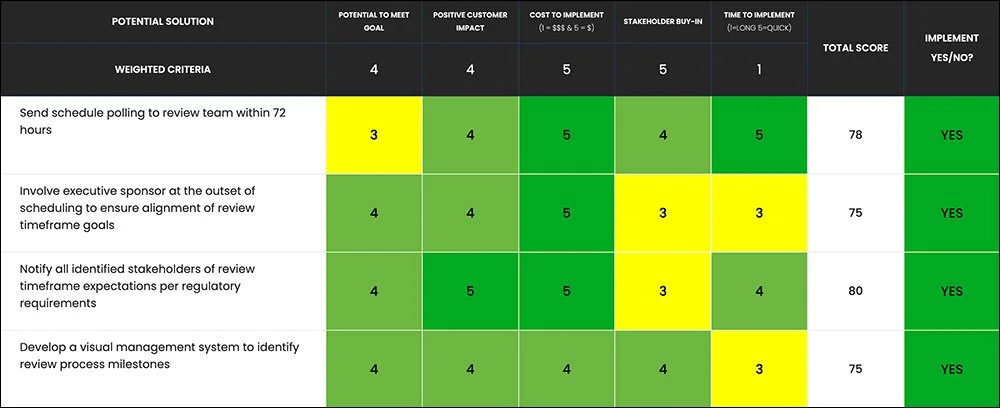
With Kure’s built-in guidance, the team was able to quickly identify and implement several high-impact improvements:
Kickoff polls were sent within 72 hours of a reported event, helping reviews start sooner.
An executive sponsor joined each case early on to provide support and keep the review a priority.
Clear timeframes were shared upfront with everyone involved, so expectations were aligned from the beginning.
A visual management system was created to track progress, highlight milestones, and spot delays in real time.
Each of these solutions was tracked and documented inside Kure, making the process easier to manage and repeatable for future projects.
The Results
Thanks to the improvements and Kure’s easy-to-follow workflow, the team cut their average review cycle time from 40 days to just 27 days—a 33% improvement.
What once felt like a frustrating, slow-moving process became smooth, trackable, and much more efficient. Delays were caught early, reviews stayed on schedule, and team members felt more confident in their roles. Most importantly, the organization became better equipped to respond to safety events quickly, helping protect patients and improve overall care.
Conclusion
By using Kure, this healthcare team was able to transform a critical process without the stress, confusion, or wasted time that often comes with improvement projects. Kure’s AI-powered support, clear structure, and built-in tools helped the team make real progress—faster than ever before.
And by applying Ethical Efficiency™ throughout the project, the team ensured that their improvements worked not just on paper, but in real life—creating a safer, fairer, and more responsive system for everyone involved.
Now, the organization is back on track—with a smarter review process, a stronger safety culture, and a repeatable model they can use to tackle future challenges with confidence.
*We value our clients’ confidentiality. While we’ve changed their names, the results are real.