Healthcare Regulatory Organization Reduced Project Initiation Review Time By 50% With Kure
Project Summary
The problem: A healthcare regulatory organization was experiencing a growing project initiation backlog that delayed project reviews, slowed implementation efforts, and reduced its ability to respond quickly to operational and regulatory priorities.
After applying Kure's AI-powered improvement platform and process improvement methods, the organization reduced request review time from 20 days to 10 days, a 50% improvement, while significantly reducing the backlog of requests waiting in the project initiation queue.
Introduction
As a healthcare regulatory organization, timely project execution is critical to supporting compliance activities, operational effectiveness, and continuous improvement initiatives. When project requests accumulate faster than they can be reviewed and approved, delays can impact organizational priorities, create inefficiencies, and slow the implementation of important improvements.
To address this challenge, the organization leveraged Kure's AI-powered improvement platform and process improvement framework. Implementation Manager SaranegaJaana Ranchithan led the initiative, using Kure to organize project work, analyze process performance, identify bottlenecks, and coordinate improvement efforts across stakeholders. Guided by the principles of Ethical Efficiency™, the team focused on creating a process that was not only faster, but also transparent, sustainable, and supportive of the people responsible for managing project requests.
The Problem
The organization was experiencing a growing backlog of project initiation requests. As request volumes increased, projects often remained in queue for extended periods before receiving review and approval. These delays affected planning activities, slowed project execution, and created frustration among stakeholders waiting for projects to move forward.
For healthcare regulatory organizations, timely project initiation is essential. Delays can impact compliance initiatives, process improvements, technology enhancements, and other projects that support organizational performance. As the backlog continued to grow, leadership recognized the need to improve the efficiency of the review process while maintaining consistency and accountability.
Reducing delays within the project initiation process became a critical priority to improve responsiveness, increase visibility, and create a more reliable workflow for future projects.
The Root Causes
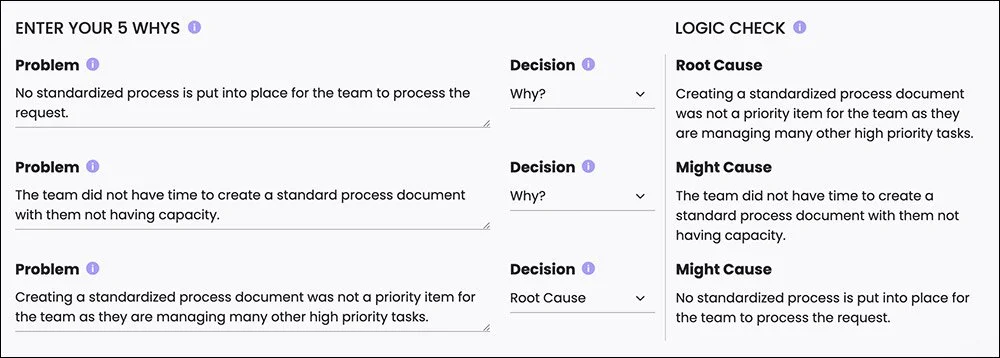
Led by SaranegaJaana, the team used Kure to evaluate the existing project initiation process and gain a clearer understanding of where delays were occurring. By reviewing process data and examining how requests moved through the workflow, several contributing factors were identified.
The analysis showed that project requests frequently experienced extended waiting periods between review steps. Inconsistent review practices, limited visibility into pending requests, and unclear ownership of certain activities created bottlenecks that slowed overall throughput. As requests accumulated, the growing backlog made it increasingly difficult to prioritize work effectively and maintain predictable review timelines.
These issues created unnecessary delays and limited the organization's ability to quickly respond to emerging priorities and improvement opportunities.
The Solutions
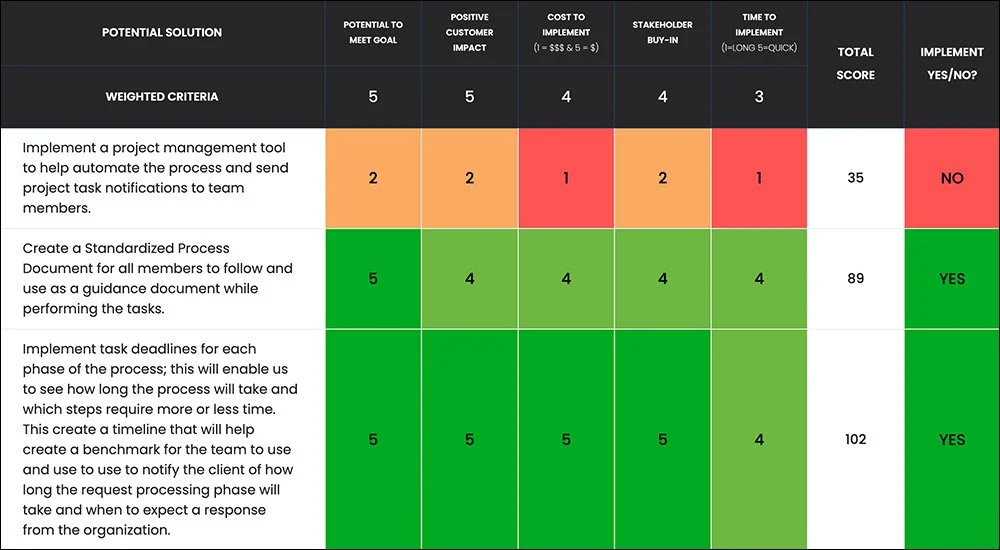
Using Kure's AI-powered project management and improvement platform, the team developed and implemented targeted solutions to streamline the project initiation process. The organization focused on simplifying workflow steps, improving communication, clarifying responsibilities, and creating more consistent review procedures.
Kure provided a centralized system for tracking requests, monitoring project status, and improving visibility across the review process. With better visibility and clearer ownership, the team was able to identify delays more quickly and manage workloads more effectively.
The improvements also reduced unnecessary waiting and established a more structured process for evaluating incoming requests. Throughout implementation, the team applied Ethical Efficiency™ principles to ensure improvements benefited both organizational performance and the employees responsible for executing the work. The result was a faster, more organized, and more sustainable process.
The Results
The project delivered significant improvements in both speed and workflow management.
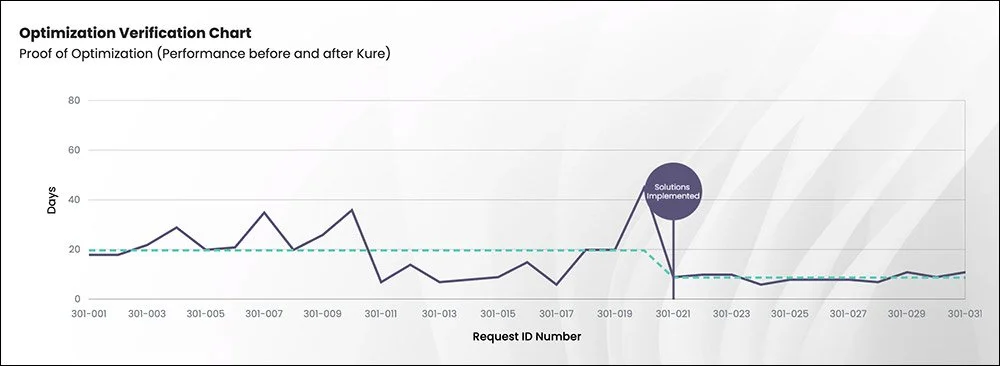
Prior to the improvement effort, project initiation requests required an average of 20 days for review and processing. Following implementation of the new process, review time was reduced to 10 days, representing a 50% reduction in cycle time.
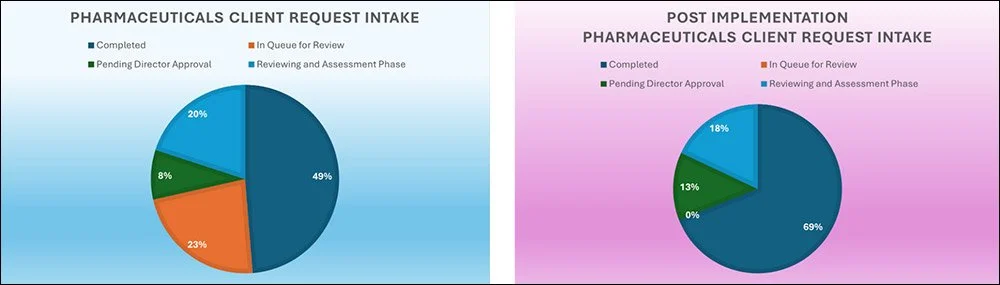
The organization also significantly reduced the backlog of requests waiting in the initiation queue. With fewer projects waiting for review and improved visibility into priorities, teams were able to begin work sooner and maintain better control of project flow.
These improvements increased organizational responsiveness, improved workload management, and created a stronger foundation for future improvement initiatives.
Before Improvement:
Average request review time: 20 days
Growing backlog of project initiation requests
After Improvement:
Average request review time: 10 days
Significant reduction in backlog volume
Improvement Achieved:
50% reduction in request review time
Conclusion
By combining Kure's AI-powered improvement platform with a structured process improvement approach, this healthcare regulatory organization successfully transformed a critical operational process while strengthening its internal improvement capabilities. Led by SaranegaJaana Ranchithan, the project demonstrates how organizations can use data-driven decision-making and modern improvement technology to achieve measurable results.
Kure enabled the team to move quickly from identifying issues to implementing solutions by centralizing project information, improving visibility, and simplifying collaboration. Rather than relying on manual tracking and disconnected processes, the organization used Kure to create a more efficient and sustainable workflow.
The project also reinforced the value of Ethical Efficiency™, ensuring that improvements supported both organizational goals and employee effectiveness. With a significantly reduced backlog, a 50% faster review process, and improved visibility into project priorities, the organization is well positioned to continue accelerating improvement efforts and responding effectively to future challenges.
Before & After
*We value our clients’ confidentiality. While we’ve changed their names, the results are real.