Project Summary
The Problem: A manufacturer struggled with lengthy production lead times averaging 9 weeks, leading to higher operating costs, frequent expediting, and difficulties meeting customer delivery expectations.
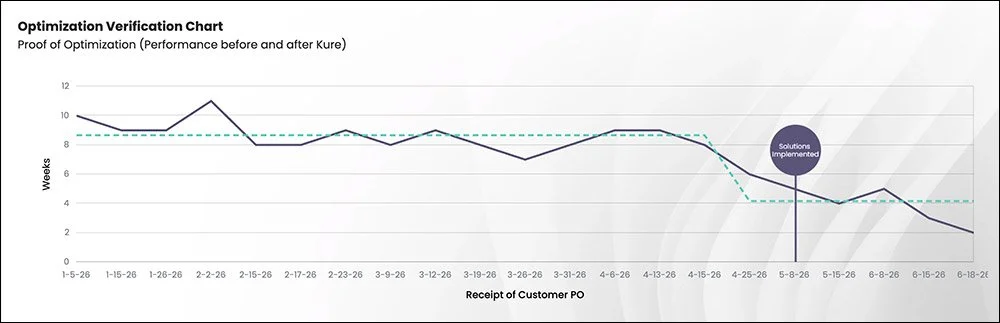
The Results: With Kure, the manufacturer streamlined production and reduced lead time from 9 weeks to just 4 weeks, a 56% improvement, increasing operational efficiency, production flexibility, and customer satisfaction.
Introduction
For manufacturers, delivering quality products on schedule is essential to maintaining customer satisfaction and supporting business growth. When production lead times began limiting its ability to meet growing demand, a manufacturer recognized the need to modernize operations and eliminate inefficiencies.
To address these challenges, the organization turned to GLSS's Lean Six Sigma Green Belt Training & Certification for practical improvement methods, alongside Kure's AI-powered process improvement platform to support a structured approach to identifying bottlenecks, organizing improvement efforts, and implementing meaningful changes.
Guided by the principles of Ethical Efficiency™, the team focused on solutions that would not only accelerate production but also strengthen employee capabilities, reduce unnecessary work, and make better use of existing resources.
The Problem
The manufacturer faced production lead times ranging from 8 to 10 weeks, creating challenges in meeting customer delivery expectations. Extended production schedules increased operating expenses, required costly expediting, and placed additional pressure on employees to complete orders.
As the organization welcomed new customers and prepared for future growth, these delays became increasingly difficult to manage. Without improvements, lengthy production cycles could limit capacity, reduce competitiveness, and affect long-term customer relationships.
The team needed a more efficient manufacturing process that could consistently deliver products on time while supporting continued business expansion.
The Root Causes
A closer examination of the manufacturing process revealed several opportunities for improvement.
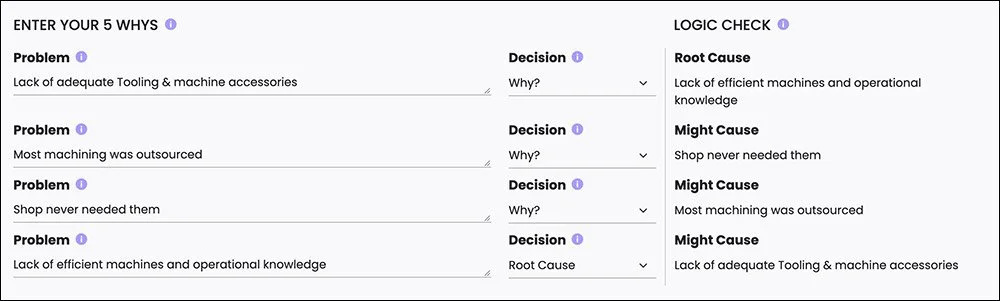
Existing equipment was not operating at its full potential, while gaps in employee training limited the team's ability to maximize available technology.
Tooling organization also presented challenges. With new equipment and additional customer requirements, employees frequently spent valuable production time locating tools and preparing machines.
Additionally, production activities relied heavily on individual employees, creating unnecessary waiting when specific operators were unavailable. The machine shop also required modernization to support evolving production demands.
Together, these issues contributed to longer manufacturing cycles and reduced operational flexibility.
The Solutions
The manufacturer implemented a series of targeted improvements to increase production efficiency and reduce unnecessary delays.
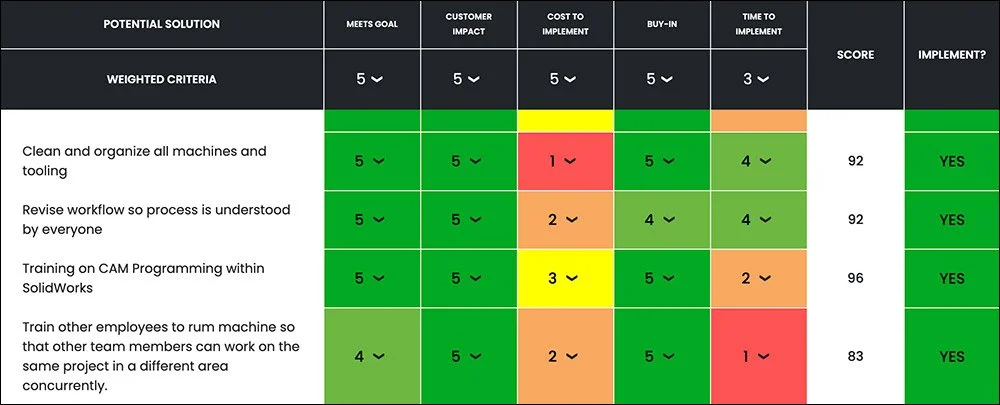
First, the organization invested in a new production machine to expand manufacturing capabilities and improve equipment performance.
Next, the team cleaned and reorganized machines and tooling, making equipment easier to locate and reducing preparation time. Production workflows were also updated and documented, providing employees with clearer, more consistent procedures.
To further strengthen operations, employees received training in CAM programming using SolidWorks, improving their ability to operate advanced manufacturing equipment.
Cross-training was another key improvement. By enabling multiple employees to operate essential machines, the organization reduced its dependence on individual operators and allowed team members to work on different stages of production simultaneously.
These improvements reflected Ethical Efficiency by reducing wasted time, expanding employee skills, and creating a more flexible, supportive production environment.
The Results
The coordinated improvements delivered a substantial increase in manufacturing efficiency.
Before: 9 weeks average manufacturing lead time
After: 4 weeks average manufacturing lead time
Improvement: 56% reduction in lead time
By reducing production lead time by more than half, the manufacturer improved delivery reliability and reduced its need for costly expediting.
More organized tooling and standardized workflows helped employees complete production activities with fewer delays, while cross-training increased scheduling flexibility and improved resource utilization.
The organization also strengthened its ability to accommodate additional customer demand and pursue new business opportunities with greater confidence.
Conclusion
This project highlights how modern equipment, standardized processes, and employee development can work together to transform manufacturing performance.
By applying a structured process improvement approach, the manufacturer reduced production lead time by 56%, improved operational flexibility, and strengthened customer satisfaction.
GLSS's Lean Six Sigma Green Belt Training & Certification equips teams with practical, project-based skills, while Kure's AI-powered platform helps simplify improvement projects, document processes, identify root causes, and turn insights into measurable results.
With streamlined workflows, expanded employee capabilities, and a more efficient machine shop, the manufacturer has established a strong foundation for sustainable growth, continued improvement, and long-term operational success.
*We value our clients’ confidentiality. While we’ve changed their names, the results are real.