Medical Clinic Pediatric Department Reduced Patient Rooming Time By 41% With Kure
Project Summary
The problem: Long and inconsistent patient rooming times in a pediatric department were creating delays for patients, staff, and providers.
By applying Kure’s structured improvement workflow, the team reduced average rooming time from 17 minutes to 10 minutes, a 41% improvement, improving clinic flow and reducing patient wait times.
Introduction
Healthcare organizations must balance quality care with efficiency every day. As patient volumes increase and resources remain limited, even small process delays can create longer wait times, disrupt provider schedules, and increase pressure on staff.
To address these challenges, a pediatric department at a medical clinic turned to Kure, an AI-driven process improvement platform designed to guide teams step by step through solving operational problems. Using Kure, the team was able to clearly define the issue, analyze their workflow, and implement targeted improvements that enhanced efficiency without adding staff.
Guided by the principles of Ethical Efficiency™, the team focused on improving both performance and experience. Rather than pushing staff to work faster, they redesigned the process to make it easier, more consistent, and more effective for everyone involved.
The Problem
The pediatric department was experiencing long and inconsistent times when rooming patients prior to provider visits. On average, it took approximately 17 minutes to room a patient, with significant variation between appointments.
These delays impacted the entire clinic. Patients experienced longer wait times, providers fell behind schedule, and staff faced ongoing pressure to keep up with demand.
Several factors contributed to the issue. Staff followed slightly different workflows when preparing patients, documentation steps were not always consistent, and time was often spent locating supplies or confirming required intake information.
Without a standardized process, small inefficiencies added up quickly. Improving the rooming process became critical to stabilizing operations, enhancing patient flow, and creating a more predictable schedule.
The Root Causes
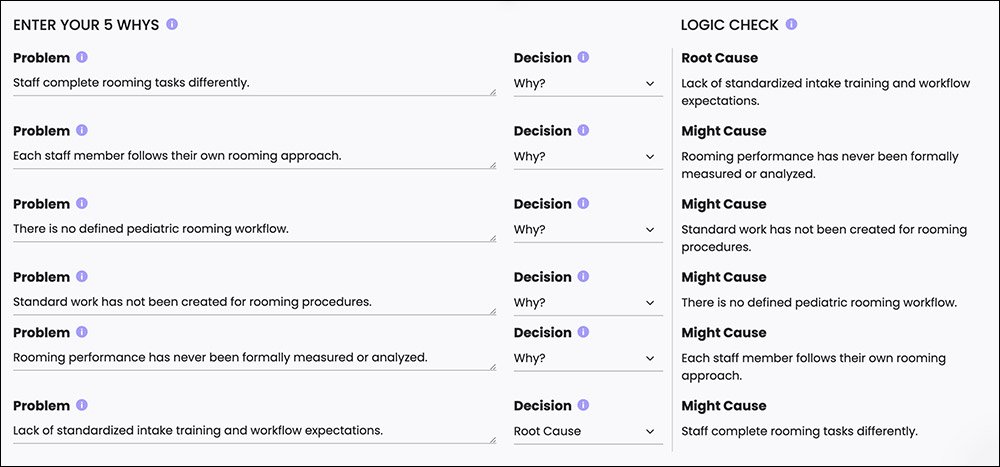
Using Kure’s guided workflow, the team identified the primary causes of the delays.
One key issue was limited system access permissions within the electronic medical record system. Staff members without proper access had to pause their work to seek assistance, adding unnecessary time to the process.
Another major factor was the lack of standardized training and workflow expectations. Without a clear, consistent approach, staff completed tasks in different sequences and spent extra time determining what needed to be done during each patient visit.
These inconsistencies created variation and slowed down the overall intake process.
The Solutions
With Kure, the team was able to move quickly from identifying root causes to implementing practical, structured solutions.
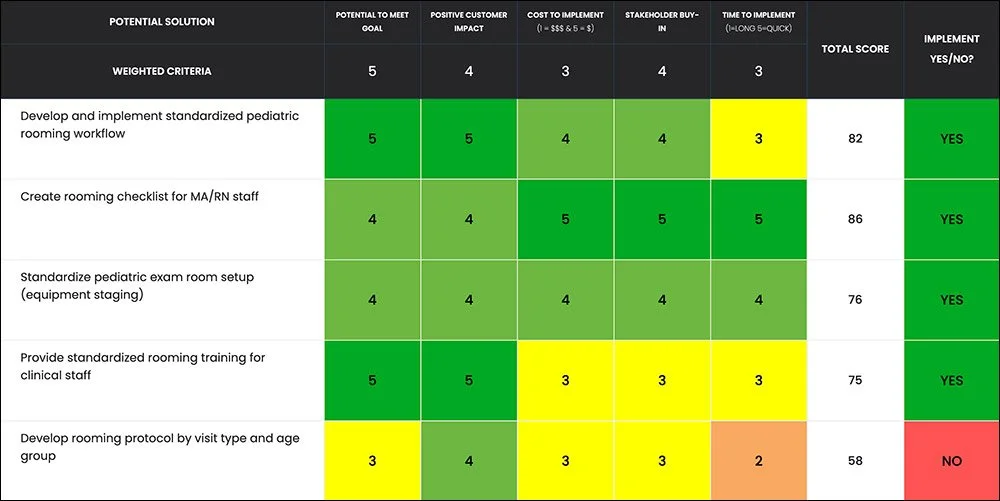
They first developed a standardized rooming workflow, clearly defining the sequence of steps for preparing patients. This created consistency and reduced variation across staff.
Next, they introduced a simple rooming checklist to guide staff through each intake. The checklist ensured that all required steps were completed correctly and consistently during every visit.
The team also standardized exam room setup, organizing equipment and supplies in the same location in each room. This eliminated time spent searching for items and improved efficiency.
Finally, they implemented standardized training to ensure all staff understood the new process, how to use the checklist, and how the improvements supported better clinic flow.
The Results
The improvements led to measurable gains in both efficiency and consistency.
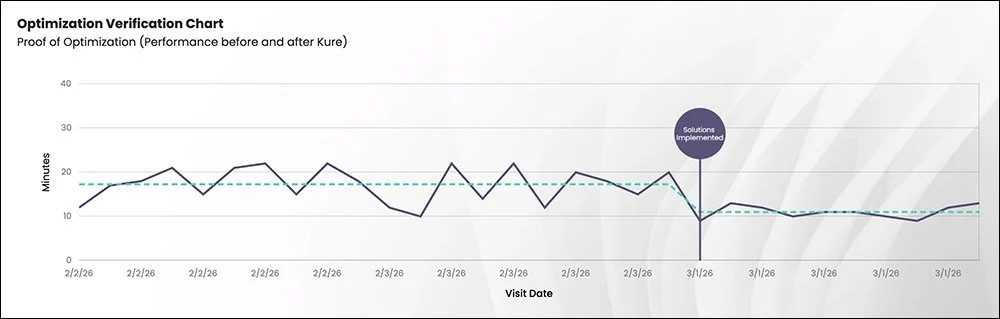
After implementing the changes, the average Time to Room a Patient decreased from 17 minutes to 10 minutes, representing a 41% improvement.
Variation in rooming times was reduced, clinic flow became more predictable, and providers were better able to stay on schedule. Staff completed intake tasks more smoothly, and patients experienced shorter wait times.
Conclusion
This project shows how structured, guided improvement can deliver meaningful results in healthcare. By using Kure, the team was able to clearly identify process gaps, implement targeted solutions, and achieve measurable improvements in a short period of time.
Kure’s intuitive, step-by-step approach helps teams move quickly from problem identification to execution, making it easier to complete improvement projects with confidence and consistency. The project also reflects the principles of Ethical Efficiency™, improving performance while supporting both staff and patient experience.
With a more efficient and standardized rooming process in place, the medical clinic is well positioned to continue improving operations and delivering high-quality care.
*We value our clients’ confidentiality. While we’ve changed their names, the results are real.