Healthcare System Improved Restraint Compliance By 50% With Kure
Project Summary
The problem: A regional healthcare system faced inconsistent restraint documentation, creating compliance risks and limiting visibility into patient safety practices.
Using a structured, data-driven approach in Kure, led by Katie Jacobs, the team increased compliance from 47% to 71%, achieving a 50% improvement.
Introduction
In healthcare, consistency is critical. When processes vary across teams or units, it becomes harder to ensure patient safety, maintain compliance, and respond effectively to issues.
A regional healthcare system identified restraint documentation as a high-risk process that needed improvement. Because restraint use directly impacts patient rights and is closely monitored by regulatory bodies, even small gaps in documentation can create serious consequences.
To address this, the team used Kure, an AI-powered platform designed to guide teams through real-world process improvement. With Kure, they were able to clearly define the problem, analyze root causes, and implement solutions in a structured, trackable way. The platform helped centralize their work, making it easier to collaborate, monitor progress, and sustain improvements over time.
Project lead Katie Jacobs worked closely with clinical leaders to turn insights into action, ensuring that improvements were both practical and sustainable.
The Problem
The organization was experiencing inconsistent restraint documentation across multiple clinical areas. Required steps were sometimes missed, delayed, or recorded differently depending on the unit.
This variability created several challenges:
Increased risk during regulatory surveys
Limited ability to demonstrate compliance
Reduced confidence in patient safety practices
In addition, the organization was only reviewing a small sample of cases each quarter. With just 10 audits per quarter, it was difficult to identify trends or respond quickly when issues occurred.
The lack of visibility made it clear that a more consistent and scalable approach was needed.
The Root Causes
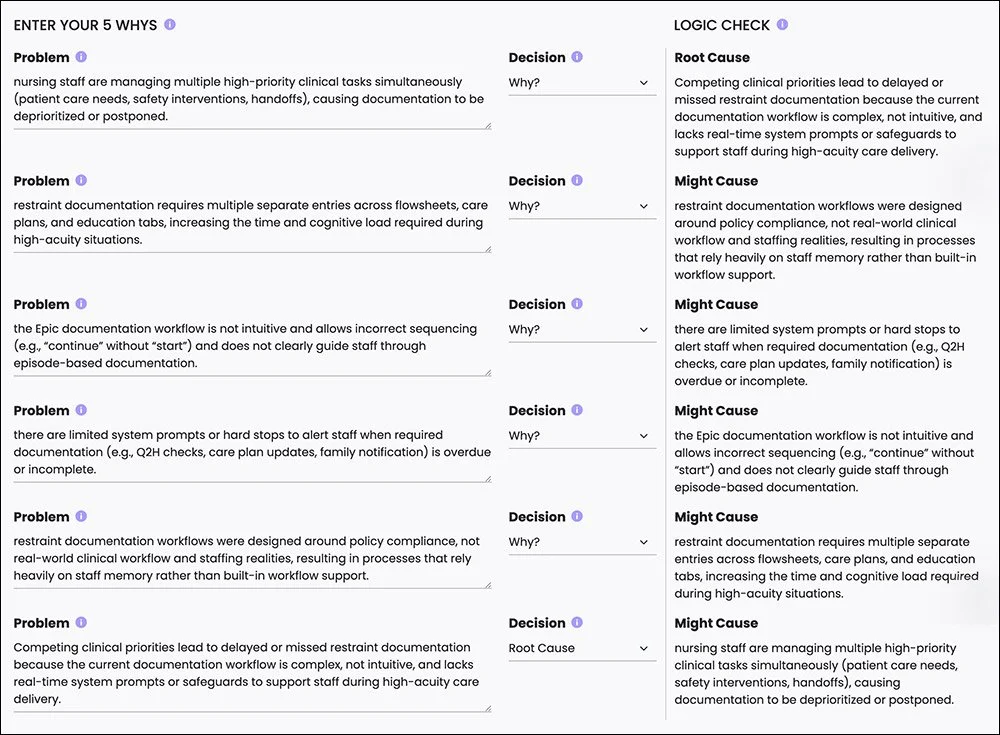
Using Kure’s structured workflow, the team identified two primary drivers behind the issue.
First, the documentation process itself was not intuitive. In fast-paced clinical environments, staff are managing multiple priorities at once. Without clear prompts or guidance, required steps were sometimes missed during documentation.
Second, education and reinforcement were inconsistent. Training typically occurred during onboarding or after issues were identified, rather than being reinforced regularly in daily workflows.
By capturing and organizing these insights in Kure, the team was able to focus on the factors that had the greatest impact on performance.
The Solutions
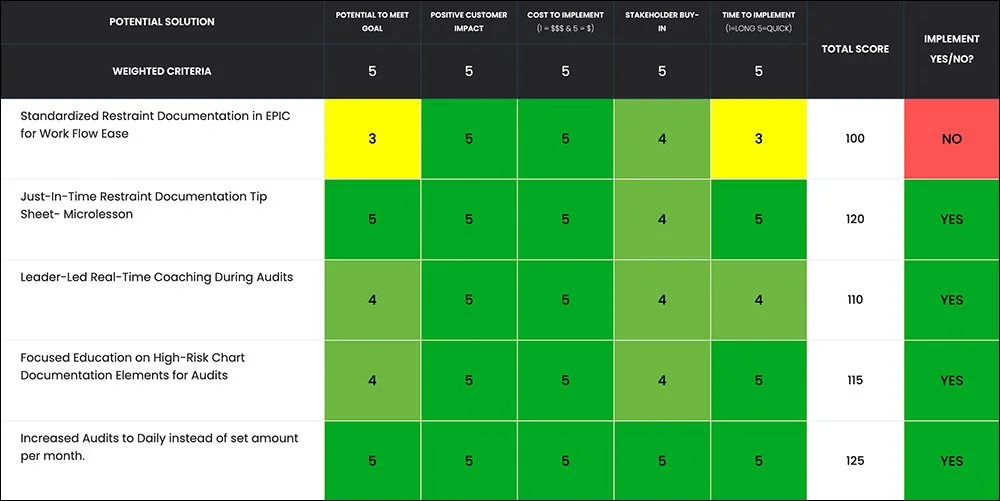
With clear root causes identified, the team implemented targeted solutions directly aligned to the problem.
Just-in-time guidance: A short, easy-to-use restraint documentation tip sheet was introduced as a micro-lesson, giving staff quick access to key requirements during patient care
Real-time coaching: Leaders began reviewing documentation during audits and providing immediate feedback to reinforce correct practices
Focused education: Training was refined to emphasize high-risk documentation elements most critical for compliance
Increased visibility: Audit frequency was expanded from quarterly sampling to daily reviews, allowing teams to detect and address issues much faster
Kure helped the team organize these actions, track implementation, and ensure that each solution was tied back to the root causes identified earlier.
The Results
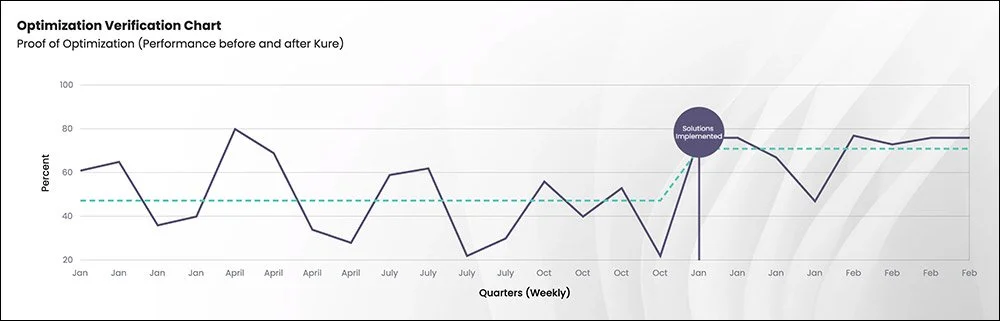
The impact of these changes was both measurable and sustainable.
Compliance improved from 47% to 71%
50% overall improvement in restraint documentation compliance
Beyond the numbers, the organization established a stronger system for maintaining performance:
Daily audits now provide continuous visibility
Unit leaders have clear ownership of compliance
Escalation pathways ensure issues are addressed quickly
With these controls in place, improvements are not only achieved but sustained.
Conclusion
This case demonstrates how Kure helps teams move from unclear problems to measurable results with speed and clarity.
By guiding the team through a structured improvement process, Kure enabled Katie Jacobs and her team to:
Identify what was really driving performance gaps
Implement focused, practical solutions
Build a system that sustains results over time
Most importantly, the improvements strengthened both compliance and patient safety. By making documentation clearer, more consistent, and easier to follow, the organization reduced risk while better protecting patient rights.
With Kure, the team now has a repeatable approach they can apply to future improvement opportunities, turning everyday challenges into measurable outcomes.
*We value our clients’ confidentiality. While we’ve changed their names, the results are real.