Town Government Data Center Reduces Account Password Resets By 54% With Kure
PROJECT SUMMARY
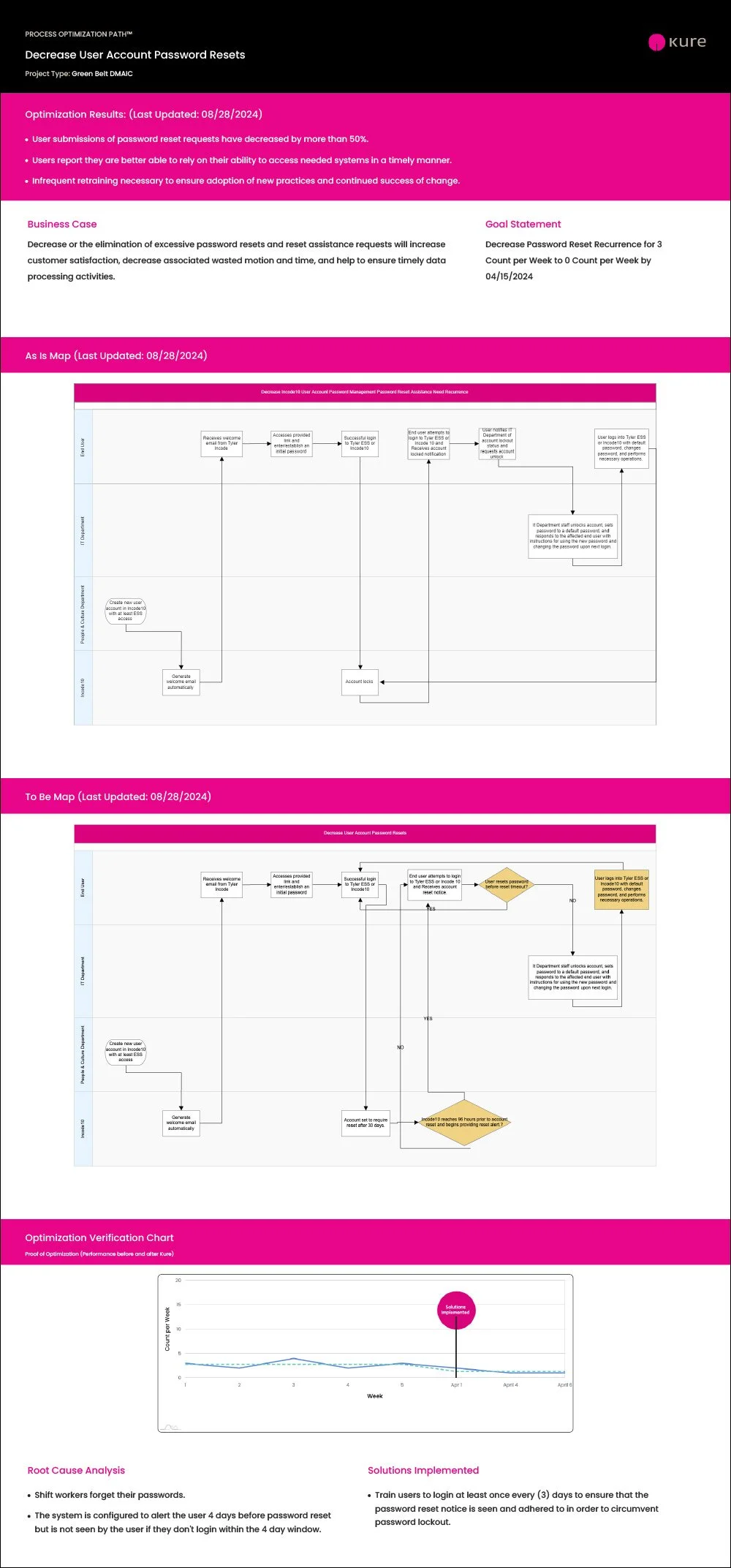
Business Case
Decreasing or eliminating excessive password resets and reset assistance requests will increase customer satisfaction, decrease associated wasted motion and time, and help ensure timely data processing activities.
Root Cause Analysis
Shift workers forget their passwords.
The system is configured to alert the user 4 days before password reset but is not seen by the user if they don’t log in within the 4-day window.
Solutions Implemented
Train users to log in at least once every 3 days to ensure that the password reset notice is seen and adhered to in order to circumvent password lockout.
Project Results
User submissions of password reset requests have decreased by more than 50%.
Users report they are better able to rely on their ability to access needed systems in a timely manner.
Infrequent retraining necessary to ensure adoption of new practices and continued success of change.
Summary
The problem: A government data center faced excessive user account password resets. This seemingly minor issue created a ripple effect that slowed down access to critical systems, hampered task completion, and ultimately reduced overall efficiency.
With Kure, the data center team was able to reduce password resets by 54%.
The Problem
Password resets had become a serious bottleneck for the data center. Users, particularly those working in shifts, often forgot their passwords, leading to a surge in reset requests. These delays meant that staff couldn’t access the systems they needed when they needed them. This not only wasted valuable time but also led to frustration and a drop in customer satisfaction. It was clear that if this issue wasn't addressed, the data center’s efficiency would continue to decline.
Recognizing the importance of a well-coordinated approach, the data center assembled a skilled team, led by a project leader who was well-versed in GLSS Green Belt methods and principles. To streamline their efforts, they utilized Kure, an AI-powered process improvement workflow tool that guided the team through the project, providing examples, guidance, suggestions, and AI-driven data analysis at every step. This combination of expertise and cutting-edge technology allowed the team to focus more on problem-solving and less on the administrative side of the project.
The Root Causes
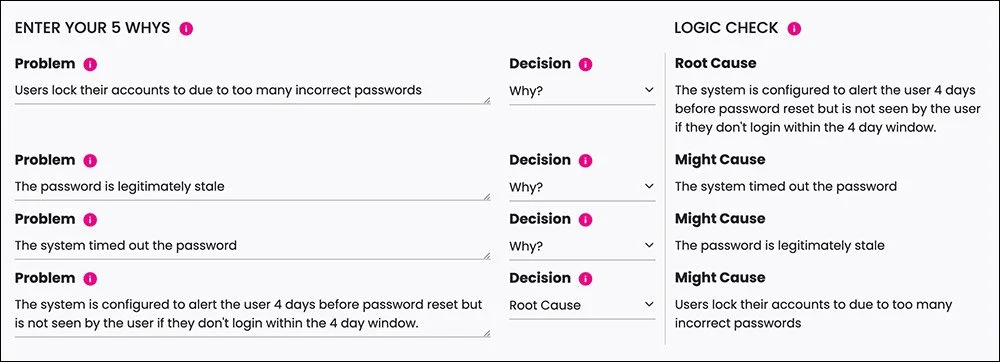
To solve the problem effectively, the team first needed to understand why users were forgetting their passwords so frequently. Using Kure’s automated DMAIC (Define, Measure, Analyze, Improve, Control) methodology, they uncovered two key root causes:
Shift Workers Forgetting Passwords: Shift workers, who didn’t log in regularly, were more likely to forget their passwords due to their irregular login schedules.
Ineffective Password Reset Notifications: The existing system sent out password expiration alerts just four days before the passwords were set to expire. However, if users didn’t log in during that brief window, they missed the notification and ended up locked out.
The Solutions
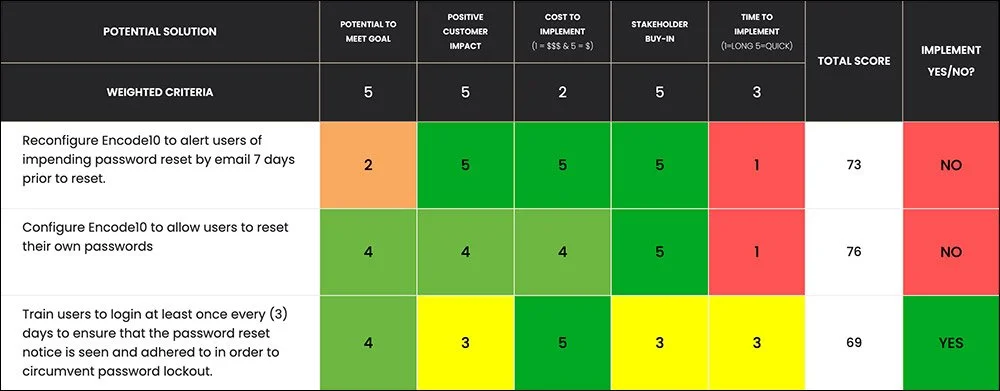
With a clear understanding of the problem, the team developed a straightforward but powerful solution, again leveraging Kure’s AI-driven insights to refine their approach: The team trained users to log in at least once every three days. This simple habit ensured that users would see the password expiration notifications in time to take action, significantly reducing the chances of getting locked out.
This solution was not only easy to implement but also highly effective, ensuring that users stayed informed about their account status and reducing the need for emergency resets.
The Results
The results of this initiative were both immediate and impressive. Here’s what the data center achieved:
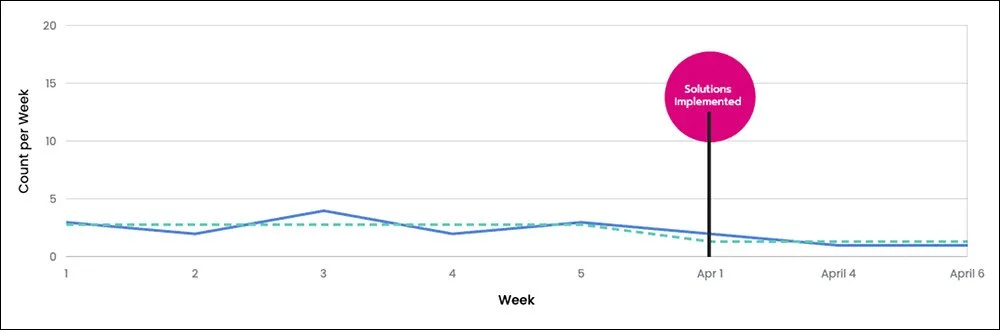
54% Reduction in Password Resets: By encouraging regular logins, users became more aware of their password status, which dramatically reduced the number of reset requests from 2.8 per day to just 1.3 per day. As users continue to adopt this practice, the team expects the number of resets to drop even further.
Enhanced User Reliability: Users reported a significant improvement in their ability to access necessary systems without delays. This increased reliability led to higher satisfaction levels and smoother daily operations.
Decreased Need for Retraining: With fewer password-related issues, the need for retraining sessions also decreased. Users became more confident in managing their accounts, freeing up the team to focus on other important tasks.
Conclusion
This project is a testament to the power of combining human expertise with advanced AI-driven tools like Kure. By focusing on a simple yet effective solution—encouraging regular logins—the data center was able to address a persistent issue that was dragging down efficiency. Kure’s innovative AI-driven workflow allowed the team to complete the project faster than traditional methods, demonstrating how technology can drive quicker, more effective results.
Looking ahead, the data center is well-equipped for future success, with the tools and knowledge to tackle new challenges efficiently. The positive changes made during this project have laid a strong foundation for ongoing improvement and operational excellence.
*We value our clients’ confidentiality. While we’ve changed their names, the results are real.