Process Mining and Execution Management Leads to Process Optimization
Businesses and organizations are not achieving their full digital potential to make use of multiple data sources because they lack understanding of how interactions happen and where information can be found. Process mining paired with execution management can resolve this.
“Process Mining” is a method using algorithms to event log data so that trends, patterns and process details can be determined. This information can then be analyzed to optimize workflows, production, or services.
Most organizations today use Enterprise Resource Planning (ERP) or Customer Relationship Management (CRM) software to establish audit trails of work processes. These “trails” are then recorded as log data. Process mining takes the log data to create a model or map showing an intuitive and accessible visualization of any given process from end to end.
The model can reveal root causes of deviations from the norm, i.e., errors, inefficiencies, silos and other problems which can then be identified and fixed.
Process mining may thus lead to greater automation and overall process improvement. This will not happen, however, without execution management.
Execution management takes the data derived from process mining and subjects it to software programs designed to show what actions can fix problems, using intelligence and automation. Event log data can identify problems. Solutions can then be creatively developed and processes optimized.
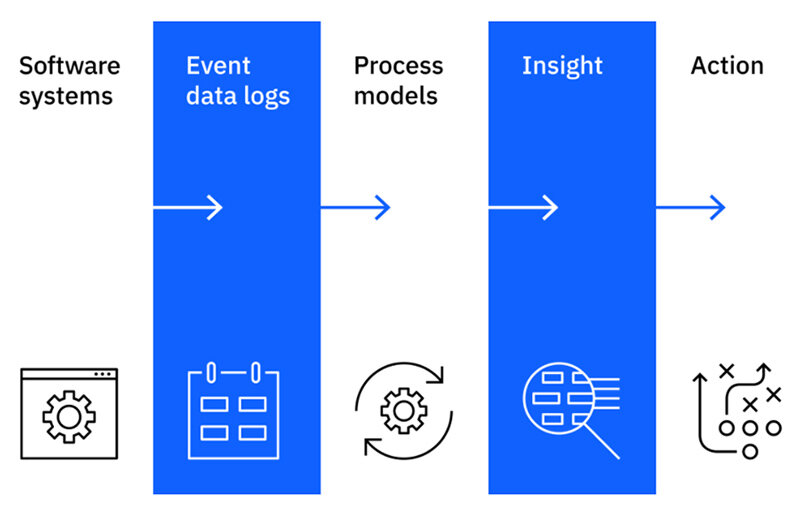
Source: IBM