The City Government of Ferris, Texas Reduced Permit Application Processing Time By 33% With Kure
PROJECT SUMMARY
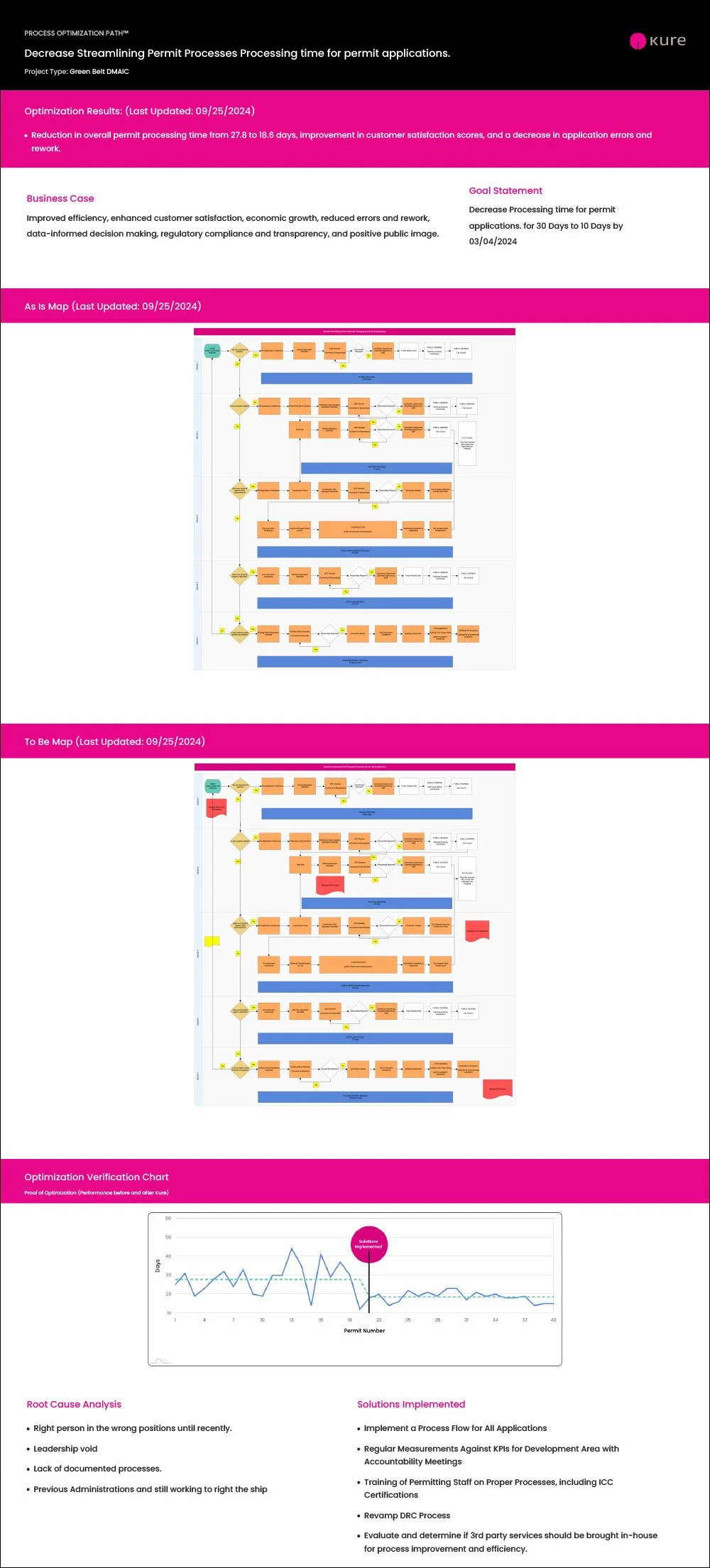
Building, zoning, and other permit applications were taking 27.8 days to process resulting in customer complaints, project delays, and hindering local development.
Through the use of Kure, an AI-driven process improvement software, the city was able to reduce the time to 18.6 days—a 33% improvement.
The Problem
Ferris, Texas, a small town just south of Dallas, is famous for its strong community ties and rich history as the "Brick Capital of the Nation." Like many close-knit towns, Ferris has faced the challenge of running an efficient city government with limited resources. However, when the permit application process became a major hurdle, they turned to innovation to solve it. Through the use of Kure, an AI-driven process improvement software, the city successfully cut permit processing time by 33%, making life easier for residents and developers alike.
The city of Ferris was facing a major roadblock: permit applications, including building and zoning permits, took an average of 27.8 days to process. This led to project delays, frustrated developers, and a slow pace of local development. The delays were more than an inconvenience—they were holding back the city’s growth.
Brooks Williams, CEO of Ferris’ city government, summed it up well:
“We knew that delays in our permitting process were more than just an inconvenience—they were holding back our city’s growth. By addressing these inefficiencies, we could better support our residents and businesses, ultimately positioning Ferris for future success.”
A team of skilled professionals, led by a project leader who utilized Kure's AI-powered software, came together to tackle the problem. Kure’s AI-guided workflow, which follows the DMAIC (Define, Measure, Analyze, Improve, Control) structure, helped the team streamline their project work, focus on solutions, and identify the real causes behind the delays.
The Root Causes
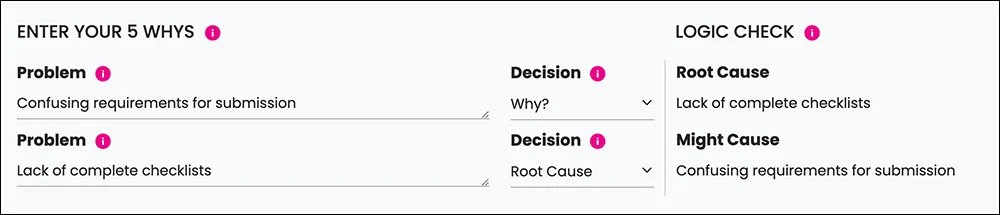
Through the project, the team uncovered three main reasons for the lengthy permit processing times:
Staff Training Gaps: Many of the staff handling permit applications weren’t fully trained, leading to mistakes and delays.
Leadership Vacancies: A lack of leadership in key roles meant slower decision-making, which further delayed the approval process.
Unclear Processes: Without well-documented, standardized procedures, the staff struggled with inconsistencies, causing further delays in application handling.
The Solutions
Using Kure's AI-driven guidance, Ferris City was able to identify and implement solutions that quickly addressed these issues:
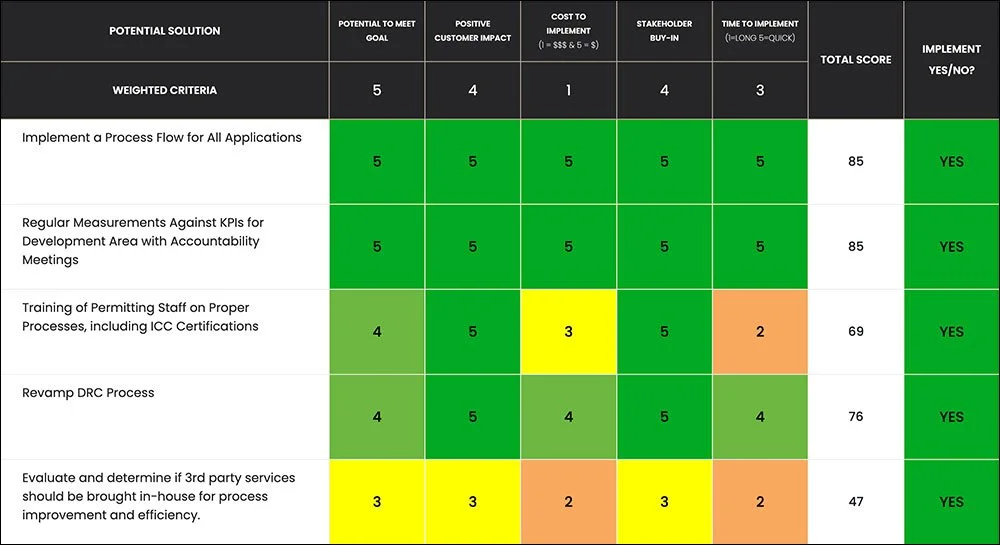
Clear, Documented Procedures: Kure helped the team develop easy-to-follow, standardized workflows for every permit type. This made the process smoother and reduced confusion among staff.
Tracking Key Performance Indicators (KPIs): Kure's data analysis capabilities enabled the city to measure permit processing times against KPIs, allowing them to stay on track and adjust when necessary.
Staff Training Programs: The team prioritized training the permitting staff, making sure they had the skills needed to process applications accurately and efficiently. This training gave employees more confidence and competence in their roles.
Evaluating Outsourced Services: Kure’s suggestions also led Ferris to evaluate whether certain third-party services, such as inspections, could be brought in-house to improve control and reduce delays.
The Results
The improvements were both significant and fast. With Kure’s AI-driven guidance, Ferris was able to:
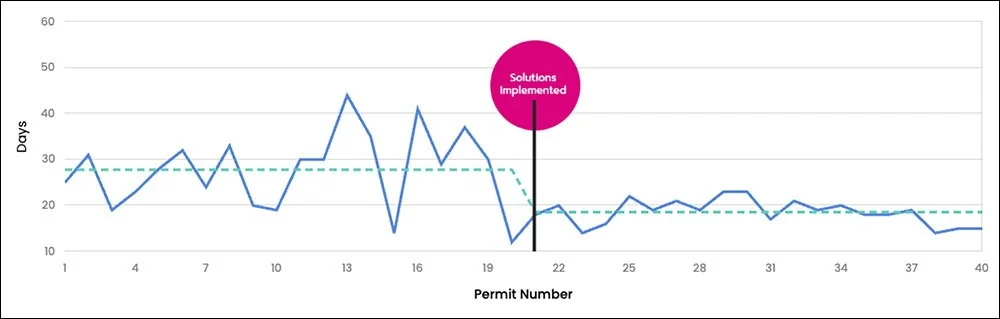
Cut Permit Processing Time by 33%: The average time to process a permit dropped from 27.8 days to just 18.6 days. This quicker turnaround allowed local projects to start sooner, boosting development in the city.
Increase Customer Satisfaction: By reducing wait times and minimizing errors, the city saw fewer complaints from residents and developers. This new level of efficiency helped enhance Ferris’s reputation as a responsive, well-run government.
Reduce Errors and Rework: With a more organized process in place, staff made fewer mistakes, resulting in less rework and quicker approvals overall.
Conclusion
The city of Ferris, Texas, successfully transformed its permit application process, cutting down delays by an impressive 33%. With Kure's AI-powered workflow, the team was able to identify and solve root causes efficiently, complete projects faster, and deliver better results for their community.
By embracing innovation and using AI to guide them through the project, Ferris has positioned itself for continued growth. The city’s leadership is now equipped to handle an increase in permit demand, ensuring future development is smooth and timely. This success story is a perfect example of how AI-powered tools like Kure can revolutionize government operations, helping small towns thrive by driving efficiency and growth.