Nonprofit Reduces Grocery Donation Data Entry Time By 43% With Kure
PROJECT SUMMARY
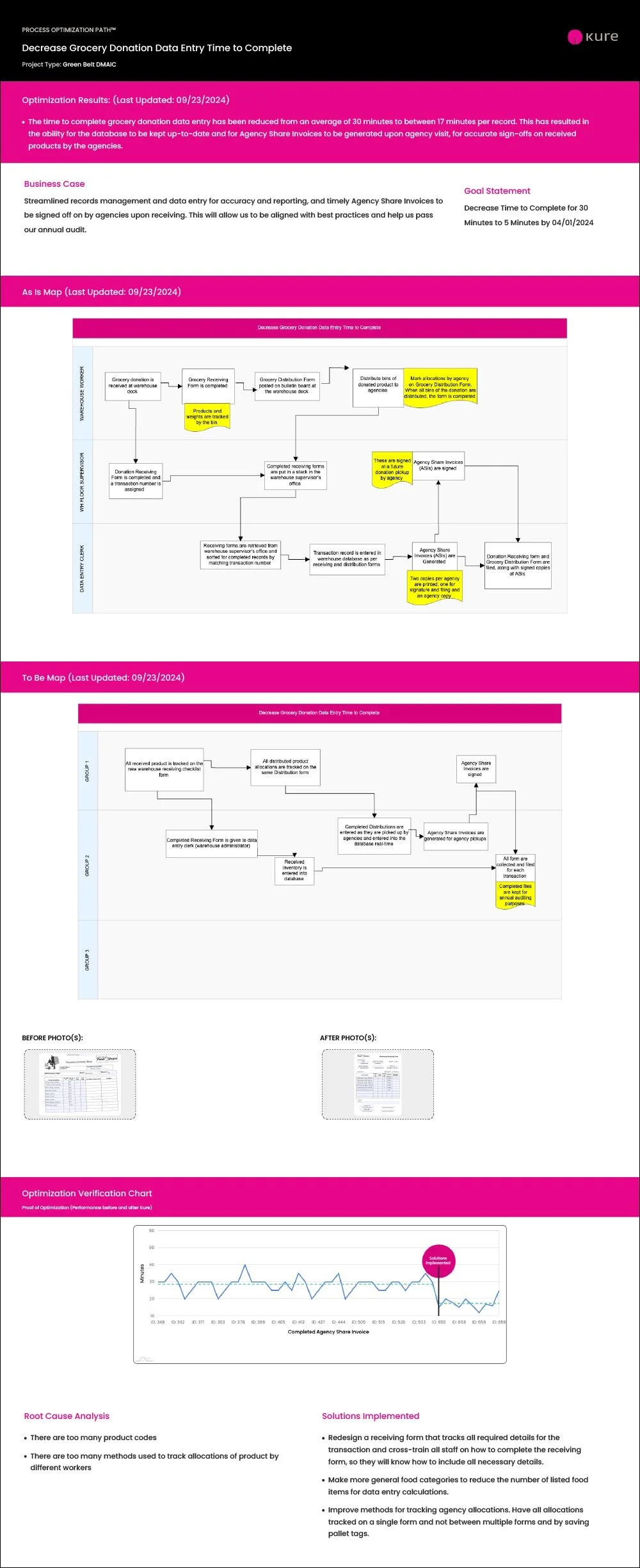
Each record of a grocery donation took over 30 minutes to process, creating a bottleneck in the system. This slow data entry process led to outdated records, delayed invoice generation, and frustration among staff and agencies alike.
Using Kure's AI-powered project workflow, the organization reduced the data entry time by 43%, leading to significant improvements in the organization’s overall operational effectiveness.
The Problem
The nonprofit’s operations struggled to keep up with the growing volume of grocery donations. Each record took over 30 minutes to process, leading to delays, outdated records, and frustration among staff and partner agencies. These delays also meant that Agency Share Invoices, which needed to be signed off by agencies upon receiving donations, were often not ready in time.
As the organization’s workload increased, the inefficiencies in its system became more pronounced, making it harder to meet reporting and audit requirements. It was clear that this situation was unsustainable. The nonprofit realized that streamlining its processes wasn’t just about reducing data entry time—it was essential to its mission. Efficient operations would ensure the charity could help more people, maintain accurate records, and meet audit expectations.
A skilled project team, guided by a GLSS Green Belt candidate, took charge of this challenge. The team also utilized Kure, an AI-driven process improvement software, to provide guidance, suggestions, and data-driven insights. Kure's AI-powered workflow led the team through the DMAIC process (Define, Measure, Analyze, Improve, and Control), offering real-time solutions and best practices, making the process smoother and faster.
The Root Causes
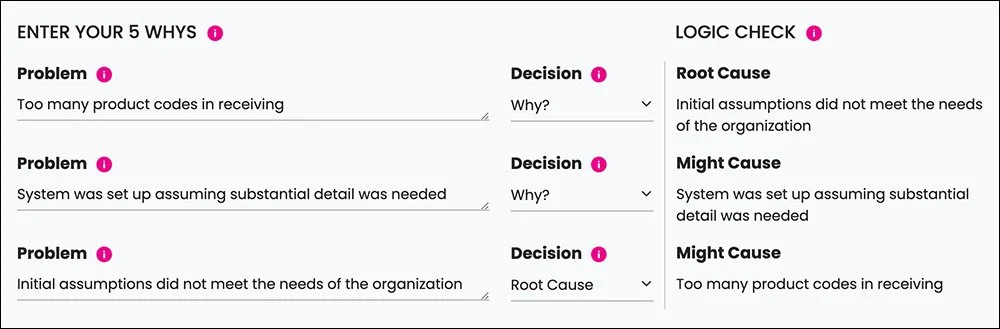
Upon review, the team identified two major causes behind the slow data entry process:
Too many product codes: The charity was trying to manage an overwhelming number of detailed product codes. This complexity added unnecessary time and confusion to each record entry.
Inconsistent tracking methods: Staff used various methods to track product allocations, which led to inconsistent data and disorganized records. This made it harder to maintain up-to-date information across the board.
The Solutions
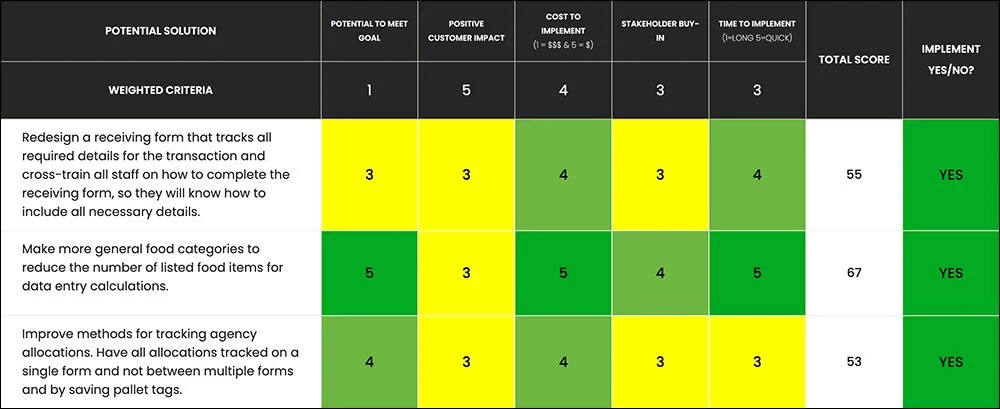
With the help of Kure, the team implemented several key changes that drastically improved the efficiency of their data entry process:
Simplified receiving forms: The existing receiving form was redesigned to capture only the essential transaction details. With Kure’s guidance, the team ensured that the form was streamlined, making it faster and easier for staff to complete. Kure’s AI suggested ways to simplify the form based on real-time data analysis.
Broader product categories: Kure recommended consolidating product codes into broader categories, which reduced the complexity of data entry. By following these AI-driven suggestions, the team was able to cut down on the number of individual codes, making the entire system more manageable.
Standardized tracking methods: The charity unified its tracking system. Instead of staff using multiple methods, a single standardized form was introduced. Kure helped the team identify this improvement opportunity and offered best practices for implementing the change. Now, all product allocations were tracked consistently and accurately across the organization.
The Results
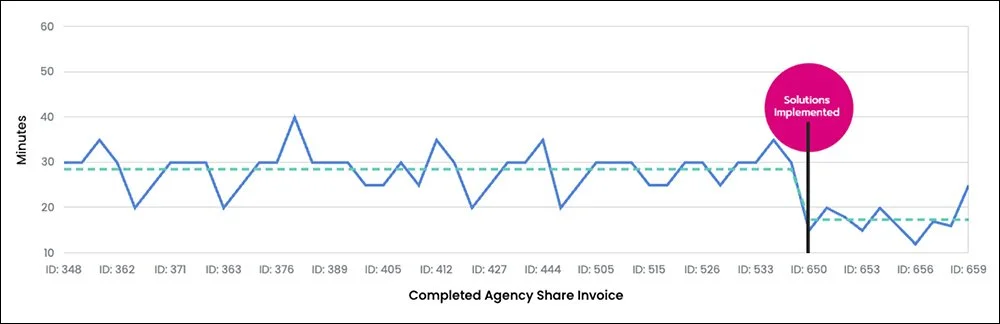
The results were immediate and impressive. The time to process each grocery donation record was reduced from over 30 minutes to just 17 minutes—a huge improvement of 43%.
The AI-driven workflow provided by Kure not only accelerated project completion but also ensured that the database was kept up-to-date. Agency Share Invoices were now generated on time when agencies arrived to pick up their donations. This new level of efficiency allowed the organization to align with best practices and meet audit standards more easily, eliminating stress for both the staff and the agencies they served.
Conclusion
Thanks to Kure’s innovative AI-powered guidance, the nonprofit achieved remarkable results in record time. The software's ability to provide real-time suggestions, data analysis, and examples enabled the team to complete the project up to three times faster than traditional methods. What once seemed like a daunting challenge was transformed into a streamlined, manageable process.
This successful project has positioned the charity for future growth and success. With Kure’s AI-powered insights, the organization can now operate more efficiently, ensuring that they continue to serve their community effectively and confidently tackle new challenges as they arise. The power of AI-driven process improvement has truly made a lasting impact, setting this nonprofit up for even greater success in the future.
*We value our clients’ confidentiality. While we’ve changed their names, the results are real.