Energy Manufacturer Reduced Internal Audit Cycle Time By 52% With Kure
Project Summary
The Problem: An energy manufacturer’s internal audit process took an average of 5 days from audit start to audit close, consuming valuable employee time and slowing the organization’s ability to respond to audit findings.
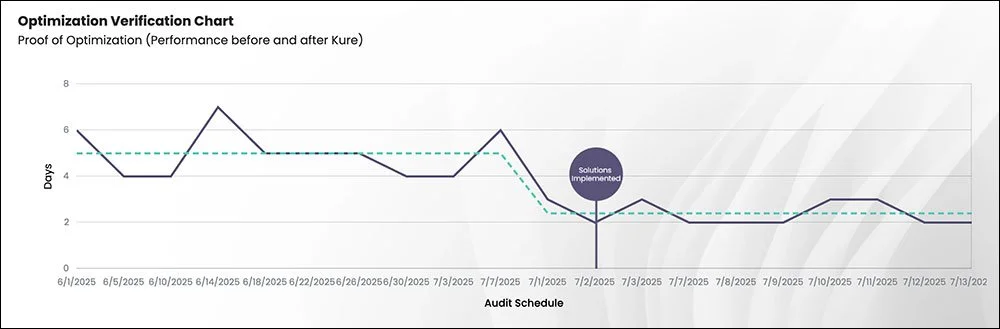
The Results: Using Kure to guide the improvement project, the manufacturer reduced average audit cycle time from 5 days to 2.4 days—a 52% improvement.
Introduction
In energy manufacturing, maintaining high standards for quality, safety, and reliability is essential. Internal audits help organizations uphold those standards, but when the audit process itself takes too long, it can consume valuable employee time and delay action on important findings.
An energy manufacturer used Kure to take a structured approach to improving its internal audit process. Kure helped the team work through the improvement journey, better understand what was causing delays, and identify practical solutions that could reduce cycle time without compromising audit quality or compliance.
The project also reflected Ethical Efficiency by focusing on more than speed. By eliminating unnecessary administrative work and creating a clearer process, the team could improve the employee experience while continuing to support quality, safety, and reliable products for customers.
The Problem
The manufacturer’s internal audit process took an average of 5 days from audit start to audit close. Employees spent significant time completing audit activities, tracking open items, following up with departments, and preparing documentation before an audit could officially be closed.
The lengthy process consumed employee capacity and made it more difficult to respond quickly to audit findings. For a manufacturer operating in a fast-moving industry, efficient support processes are critical to keeping resources focused on production, innovation, quality, and continuous improvement.
The Root Causes
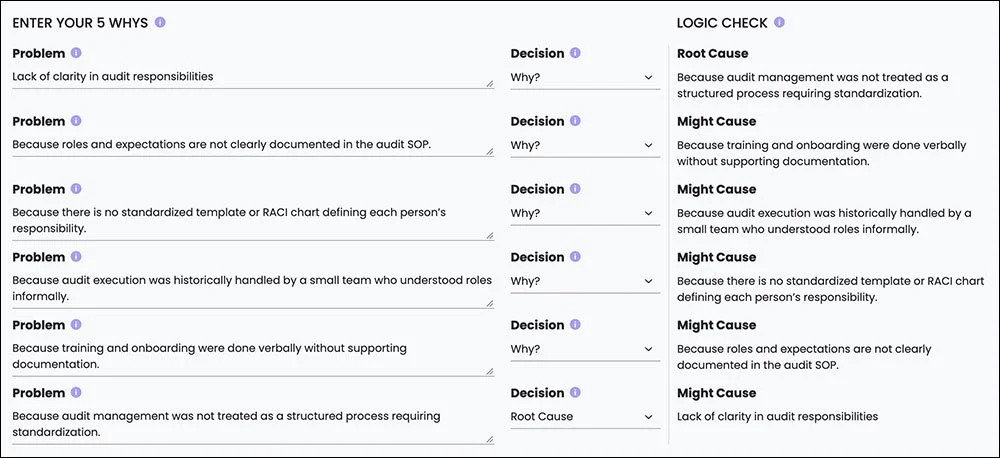
Using Kure to guide the improvement process, the team examined how internal audits were being managed and uncovered several contributing factors.
Audit management had not been standardized as a business process, leading to different approaches across departments. Audit planning focused heavily on scheduling rather than ensuring checklists reflected current operational needs.
The organization also had not established audit close time as a performance measure. Without clear expectations or visibility into how long audits remained open, delays were difficult to identify and opportunities for improvement remained hidden.
The Solutions
With a clearer understanding of the root causes, the team developed practical solutions to make internal audits easier to manage and more consistent.
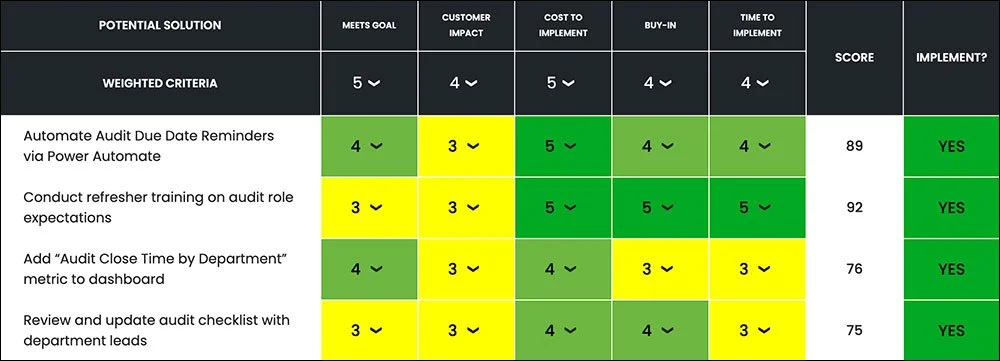
Audit checklists were standardized with department leaders to ensure they were relevant and easier to complete. RACI responsibilities were clarified so employees understood who was responsible, accountable, consulted, and informed throughout the process.
The team also introduced automatic audit due-date reminders using Power Automate, reducing manual follow-up and helping prevent missed deadlines. Refresher training reinforced audit responsibilities, while a new Audit Close Time by Department dashboard gave leaders greater visibility into performance.
Together, these improvements created a more standardized, transparent, and efficient audit process.
The Results
The project achieved a substantial reduction in internal audit cycle time:
Before: 5 days from audit start to audit close
After: 2.4 days from audit start to audit close
Improvement: 52% reduction
The manufacturer eliminated 2.6 days from the average audit cycle. Employees could spend less time managing administrative tasks and more time on value-producing work, while leaders gained better visibility into performance across departments.
The project also demonstrated Ethical Efficiency in action. Reducing unnecessary work while maintaining strong audit standards helped create a better process for employees while continuing to support quality, safety, and reliability.
Conclusion
This project demonstrates how Kure can help teams turn improvement opportunities into measurable results. By guiding the team through a structured improvement process, Kure helped the energy manufacturer uncover root causes, develop targeted solutions, and reduce internal audit cycle time by 52%.
The successful project created more than a faster audit process. It established clearer responsibilities, greater performance visibility, and a more consistent way of working—giving the manufacturer a stronger foundation for continuous improvement and future projects.
With Kure, organizations can move from identifying a problem to implementing and documenting meaningful improvements in one connected improvement platform.
*We value our clients’ confidentiality. While we’ve changed their names, the results are real.