Energy Manufacturer Reduced Banding Operation Cycle Time by 39% With Kure
Project Summary
The Problem: An energy manufacturer’s banding operation had become a production bottleneck, with an average cycle time of 188 seconds that exceeded takt time and prevented the line from consistently maintaining its desired production pace.
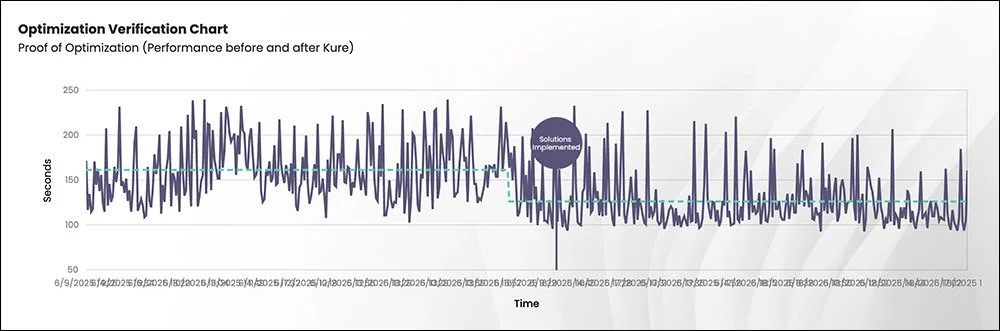
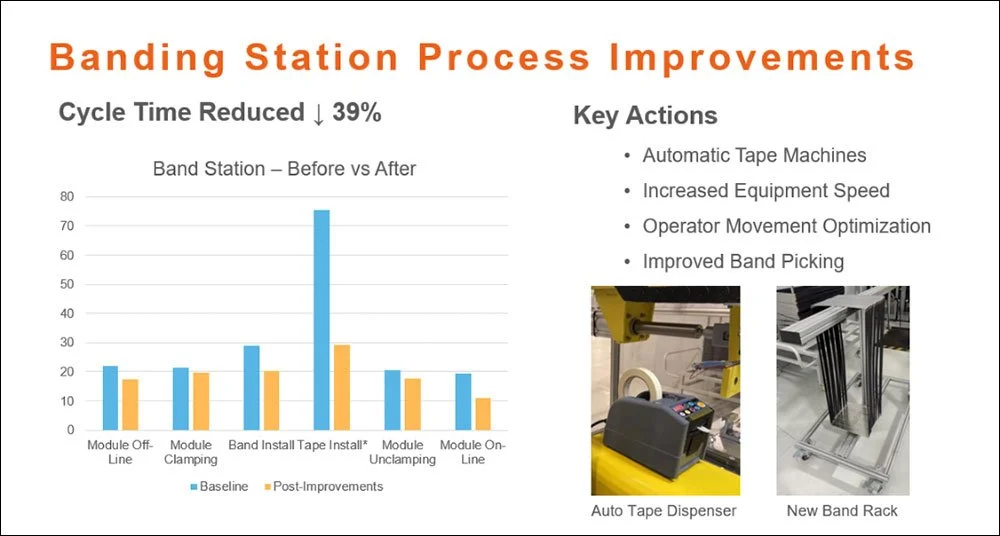
The Results: Using Kure, the improvement team reduced average banding cycle time from 188 seconds to 115 seconds—a 39% improvement—helping production move faster and more consistently.
Introduction
In manufacturing, one slow step can affect the performance of an entire production line. When an energy manufacturer identified its banding operation as a bottleneck, the improvement team used Kure to guide the project through a structured, data-informed problem-solving process.
Kure helped the team organize the project, investigate what was causing delays, and identify practical solutions focused on measurable results. The project also reflected Ethical Efficiency by improving productivity while making better use of existing equipment, employee time, and organizational resources.
The Problem
The banding station had become the slowest point in the production process. Its average cycle time of 188 seconds exceeded takt time, preventing the station from consistently keeping pace with production needs.
The bottleneck disrupted production flow, created delays for downstream operations, and increased the risk of higher operating costs and missed customer delivery expectations.
Rather than immediately adding equipment or labor, the team focused on understanding why the existing process was taking too long and where available capacity could be unlocked.
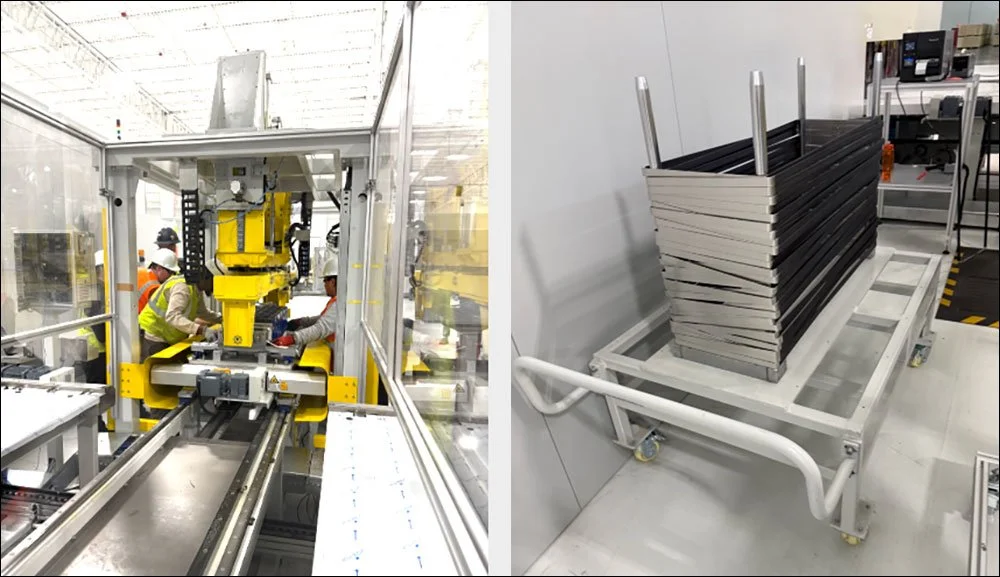
Before
The Root Causes
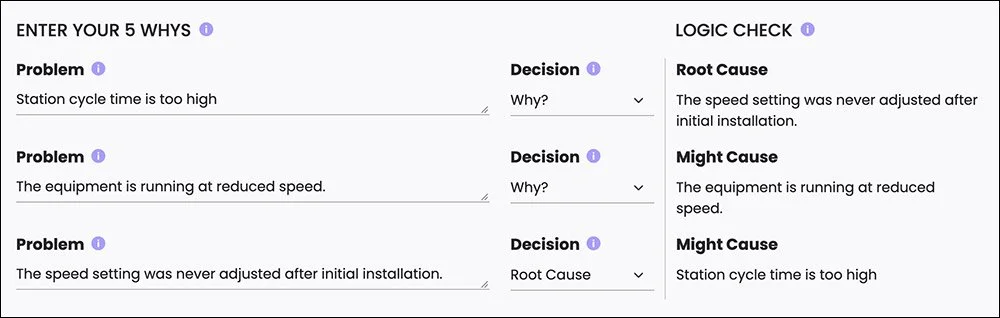
Using Kure to work through the improvement process, the team identified two primary causes behind the longer cycle times.
First, there was no clearly defined and optimized standard work for applying tape. Operators could complete the same task differently, contributing to variation and inefficiency.
Second, the equipment was operating at only 50% of its available speed. The setting had not been optimized following installation, leaving valuable production capacity unused.
These issues contributed to unnecessary waiting, manual effort, and inconsistent cycle times.
The Solutions
With the root causes identified, the team developed and implemented targeted improvements.
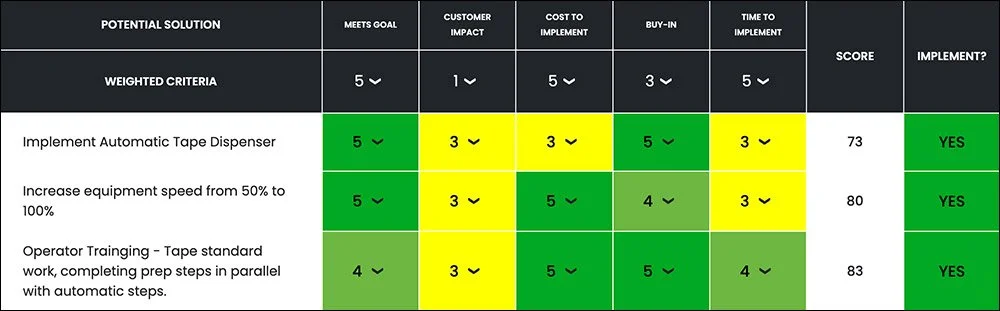
An automatic tape dispenser was introduced to simplify tape application and reduce manual effort. After confirming the equipment could safely and reliably operate at a higher speed, its setting was increased from 50% to 100%.
The team also standardized tape application procedures and trained operators on the improved process. Preparation activities were reorganized so employees could perform certain manual tasks while automated equipment was running, allowing work to happen in parallel.
Together, these changes created a faster, more consistent process while supporting Ethical Efficiency through smarter use of people, equipment, time, and existing resources.
The Results
The project delivered a significant improvement in banding cycle time:
Before: 188 seconds
After: 115 seconds
Reduction: 73 seconds
Percentage Improvement: 39%
The faster process reduced the production bottleneck and helped work move more consistently through the overall production line. The manufacturer also increased the value of its existing equipment and resources rather than relying solely on additional capacity.
Conclusion
By using Kure to guide its improvement project, the energy manufacturer transformed a production bottleneck into an opportunity to improve flow, consistency, and productivity. Equipment optimization, automation, standardized work, and smarter task sequencing combined to reduce banding cycle time by 39%.
Kure helps teams move from identifying problems to implementing measurable solutions through a structured, easy-to-follow improvement experience. This project demonstrates how organizations can use Kure to uncover opportunities within existing processes, reduce waste, and apply Ethical Efficiency to achieve meaningful results.
With a faster and more consistent banding operation in place, the manufacturer has also established an improvement approach that can be applied to future opportunities across its operations.
*We value our clients’ confidentiality. While we’ve changed their names, the results are real.