Retail Beverage Distributor Reduced Lost Freight Charges By 50% With Kure
Project Summary
The problem: A retail beverage distributor struggled with billing accuracy, with 20–30% of invoices missing freight charges due to inconsistent processes, limited visibility, and reliance on manual input.
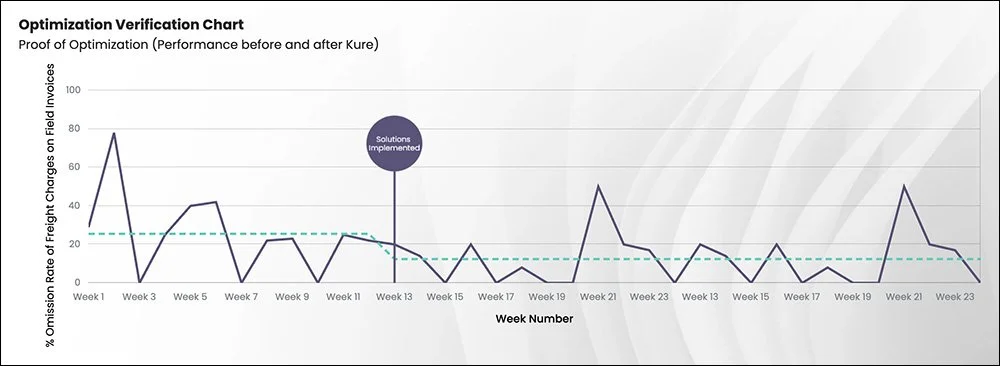
Using Kure, the organization reduced missed freight charges to approximately 12%, achieving about a 50% improvement in billing accuracy while streamlining workflows and reducing manual rework.
Introduction
Retail beverage distributors operate in a fast-paced environment where tight margins, high customer expectations, and complex field operations leave little room for error. Even small billing inconsistencies can quickly lead to lost revenue and operational friction.
To address this, a large retail beverage distributor used Kure to bring structure, visibility, and consistency to its invoicing process while applying Ethical Efficiency™ to ensure solutions were both effective and practical for frontline teams.
By leveraging Kure’s AI-powered project execution and structured workflow, the team was able to quickly identify root causes, implement targeted solutions, and track measurable results in real time.
The Problem
The organization identified a recurring issue in its invoicing process: freight charges were frequently missing from customer invoices generated by field installation teams. These gaps resulted in unbilled services, revenue leakage, and inconsistent customer experiences. Initial analysis showed that 20–30% of invoices failed to include applicable freight charges.
The issue also created downstream challenges. Finance teams spent additional time correcting invoices, field teams lacked clarity on billing expectations, and customer disputes became more likely. Without a standardized process or system visibility, the problem persisted and remained largely reactive.
The Root Causes
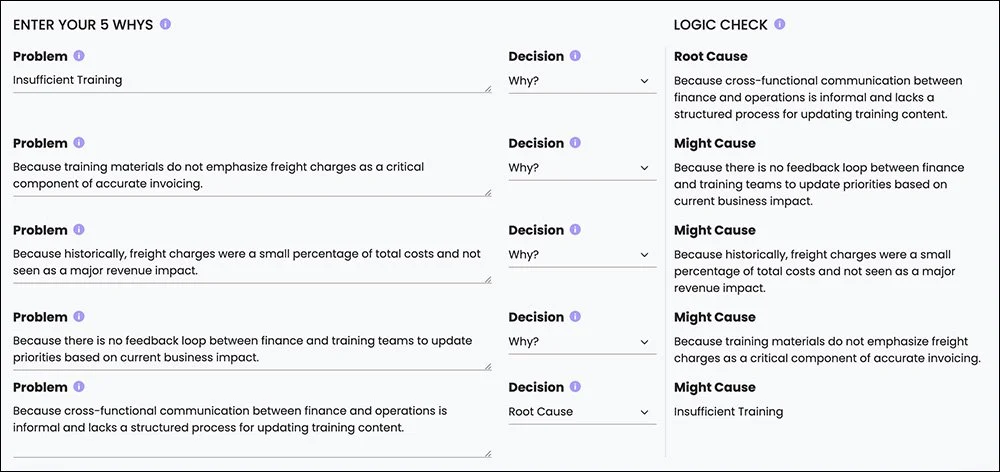
Using Kure, the team was able to surface key patterns and insights more quickly. Several contributing factors were identified:
Communication between finance and operations was inconsistent, with updates not always reaching field teams.
There was no KPI tracking or reporting to measure missed freight charges, limiting visibility into the problem.
The invoicing process relied heavily on memory, with no system prompts or requirements to ensure freight charges were included.
Kure’s structured analysis helped organize these findings clearly, allowing the team to focus on the most impactful drivers.
The Solutions
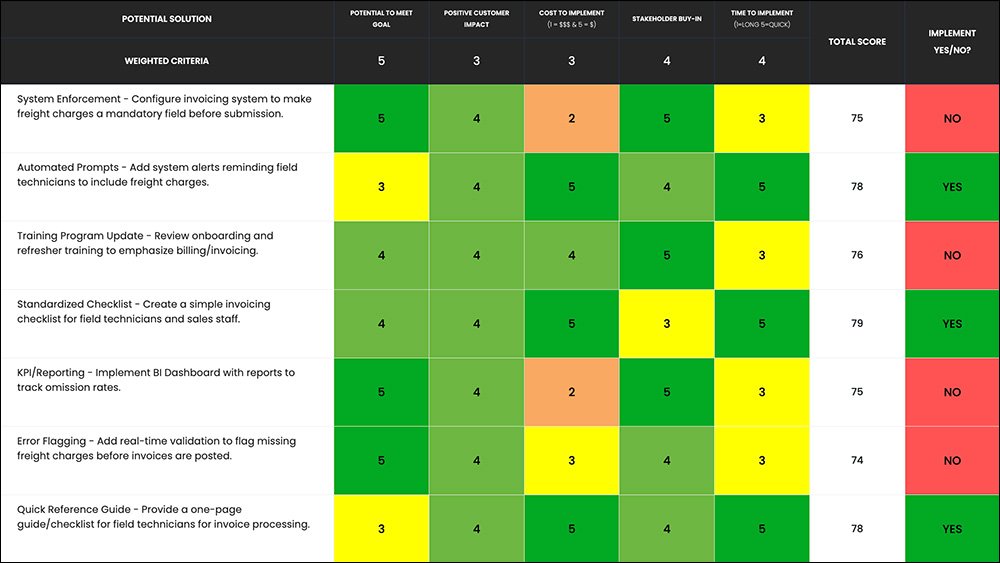
With Kure guiding the workflow, the team implemented practical, system-based solutions designed for real-world use:
Automated prompts were introduced in the invoicing process to remind technicians when freight charges applied.
A standardized invoicing checklist ensured consistency across field and sales teams.
A simple, one-page reference guide was created to support technicians in completing invoices correctly in the field.
Kure enabled the team to document, test, and refine these improvements efficiently while maintaining alignment across stakeholders.
The Results
The improvements delivered clear and measurable outcomes. Freight charge omissions dropped from 20–30% to approximately 12%, representing about a 50% improvement in billing accuracy. Revenue leakage declined, rework was reduced, and invoice consistency improved—helping strengthen customer trust.
In addition, Kure provided a scalable framework for ongoing improvement. KPI tracking now enables continuous monitoring, and the same approach can be extended to other billing elements such as taxes and discounts.
Conclusion
With Kure, the organization transformed a recurring billing issue into a structured, data-driven improvement effort. The platform enabled faster root cause identification, clearer collaboration, and more effective implementation of solutions.
By applying Ethical Efficiency™, the team not only improved financial outcomes but also made the process easier and more reliable for employees. This project demonstrates how Kure helps teams move from reactive fixes to sustainable, system-driven results—positioning the organization for continued operational success.
*We value our clients’ confidentiality. While we’ve changed their names, the results are real.