Healthcare System Increased First Case On-Time Starts By 54% With Kure
PROJECT SUMMARY
The problem: First case procedures were starting on time only 39% of the time due to unclear patient instructions, limited pre-call coverage, and inconsistent staffing, causing delays, increased patient anxiety, and added stress for clinical staff.
By redesigning pre-call workflows, improving communication, and streamlining staffing roles, the team increased first case on-time starts to 60%—a 54% improvement that enhanced patient satisfaction and reduced staff strain.
The Problem
In healthcare, starting the day off right is critical—not just for patient flow, but for patient trust and staff well-being. When morning procedures run late, it creates a domino effect of delays, stress, and reduced satisfaction. One healthcare organization knew it was time to improve how they handled their first case on-time starts—a key factor in setting the tone for each day.
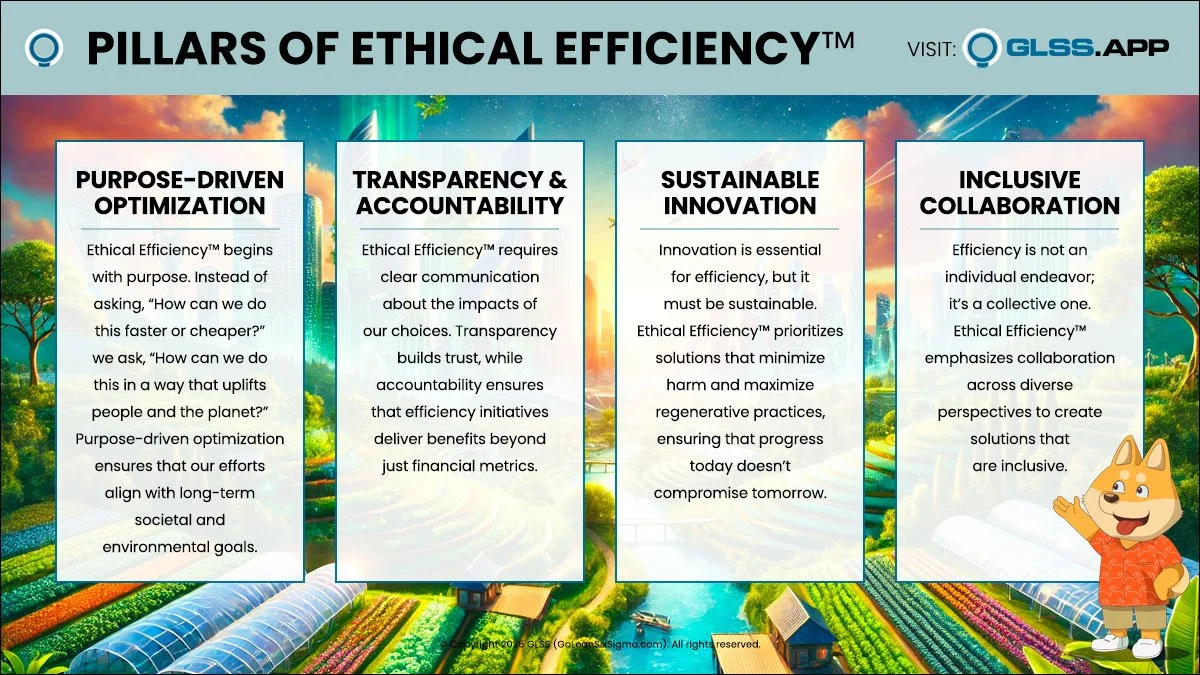
To tackle the challenge, the team chose Kure, an AI-powered improvement platform that delivers structured guidance, real-time tracking, and automatic documentation. With Kure, the team could focus on solving the problem—not managing spreadsheets or writing reports. They also leaned on GLSS Training & Certification to build their process improvement skills and lead the project with confidence. Throughout, the team kept Ethical Efficiency™ in mind—making changes that improved both outcomes and the people behind them.
At the time, only 39% of first cases were starting on time. That meant patients were waiting longer, feeling more anxious, and starting their care experience on the wrong foot. For staff, it meant added pressure, unexpected delays, and a tough start to an already demanding day.
Improving first case on-time starts became a must—not just to hit metrics, but to enhance patient experience, protect staff well-being, and improve overall efficiency across the department.
The Root Causes
Using Kure’s guided DMAIC workflow, the team got a clear view of what was holding them back. They uncovered several key issues:
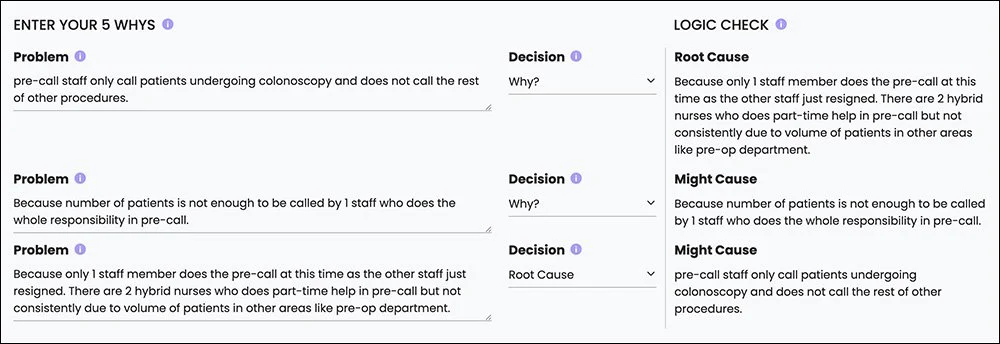
Unclear patient instructions: Patients often confused procedure time with arrival time, leading to late arrivals and rushed prep.
Limited pre-call coverage: Staffing limitations made it difficult to confirm appointments or clarify instructions ahead of time.
Inconsistent support: With only one dedicated person making pre-calls and hybrid nurses pulled in only when available, patient outreach was unreliable.
These gaps meant some patients came in late or unprepared—causing early-morning slowdowns and impacting the entire day.
The Solutions
With Kure’s step-by-step support and team collaboration features, the group was able to quickly roll out several practical improvements:
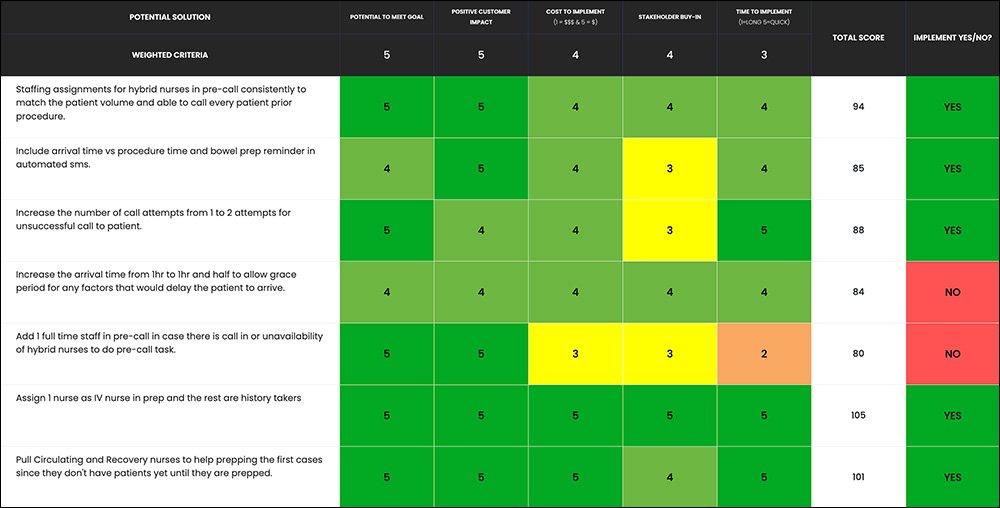
Consistent pre-call staffing: Hybrid nurses were scheduled based on patient volume, making sure all patients got a confirmation call.
Improved text messages: SMS reminders were updated to clearly include arrival time, procedure time, and prep instructions, removing guesswork for patients.
Extra call attempts: Patients who didn’t answer the first pre-call received a second call attempt—boosting contact rates and preparation.
Smarter pre-op assignments: One nurse focused solely on IV placement while others handled patient histories—allowing each team member to focus on their strengths.
Team-based support: Circulating and recovery nurses helped prep first cases before their own patients arrived, easing the morning load.
Thanks to Kure, every action and improvement was automatically documented—making progress easy to track and results easy to share.
The Results
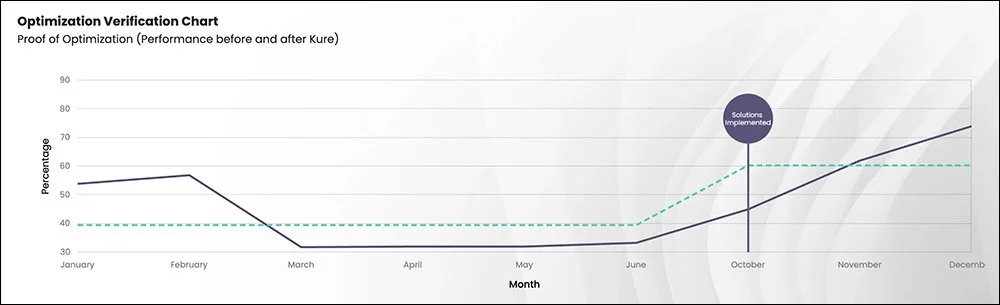
The results were clear and fast: the first case on-time start rate jumped from 39% to 60%—a 54% improvement.
Kure’s built-in tools helped the team stay organized, focused, and aligned without getting bogged down in admin work. By assigning clear roles and streamlining communication, patient prep times were reduced, and teams could work more efficiently across multiple patients.
More patients arrived on time, fully prepped, and ready to go—reducing delays and boosting confidence for everyone involved. Staff felt more supported, teamwork improved, and patients had a smoother experience from the very start of their visit.
Conclusion
By using Kure to manage the project, the organization was able to complete the improvement effort faster, keep everyone aligned, and capture results automatically—without extra reporting or overhead. Combined with the hands-on, easy-to-follow guidance from GLSS Training & Certification, the team not only achieved their goal—they gained the skills and structure to keep improving long after the project ended.
With the principles of Ethical Efficiency™ at the core, the project delivered real results for both patients and staff. Now, the organization is equipped with a repeatable, scalable approach for future initiatives—proving that with the right tools and training, better outcomes can come faster and easier.
*We value our clients’ confidentiality. While we’ve changed their names, the results are real.