Manufacturer Reduced Yoke Fabrication Setup Time By 68% With Kure
Project Summary
The Problem: A manufacturer was experiencing lengthy yoke fabrication setup times that increased overtime, created production delays, and made it more difficult to consistently meet customer delivery commitments.
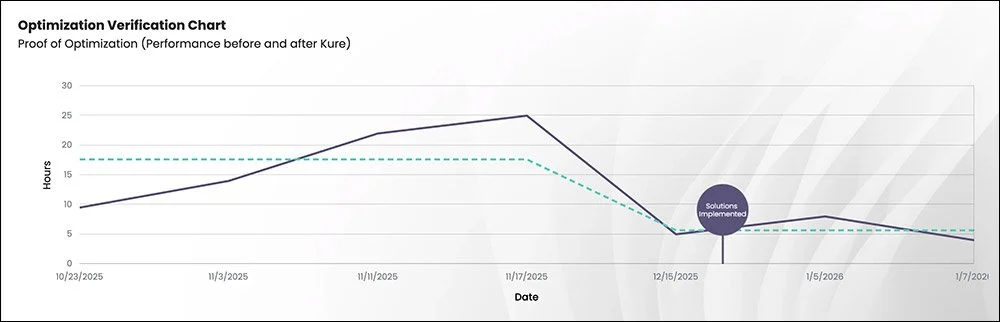
The Results: Using Kure to guide the improvement project, the manufacturer reduced average yoke fabrication setup time from 17.6 hours to 5.6 hours, a 68% improvement that helped reduce overtime, simplify production, and improve scheduling flexibility.
Introduction
In manufacturing, lengthy setup times can create challenges across an entire operation. Delays can increase labor costs, disrupt production schedules, place additional pressure on employees, and ultimately affect customers.
One manufacturer identified its yoke fabrication setup process as an opportunity for improvement. Using Kure, the team followed a structured problem-solving approach to understand what was causing the delays, identify root causes, and develop practical solutions.
The project also reflected the principles of Ethical Efficiency by looking beyond speed and cost savings. The team focused on eliminating unnecessary work, reducing overtime, making better use of resources, and creating a more reliable process for both employees and customers.
The Problem
The manufacturer's yoke fabrication setup process averaged 17.6 hours, making it difficult to keep production moving efficiently. Extended setup times could push work beyond normal hours, increase overtime expenses, and add pressure on employees.
The delays also reduced scheduling flexibility and made it more difficult for the company to consistently meet production deadlines and customer delivery commitments.
Using Kure, the team focused the project on reducing setup time and creating a simpler, more dependable fabrication process.
The Root Causes
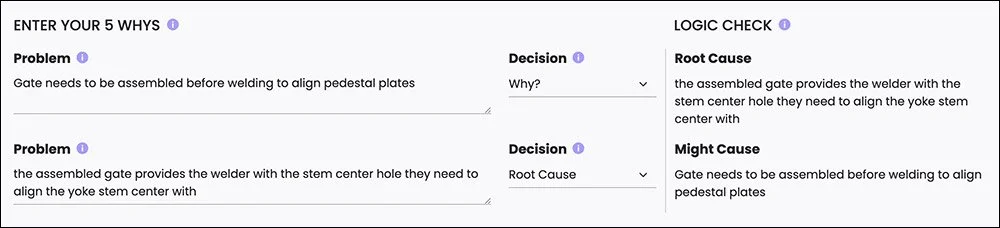
The team examined the existing process and identified two major causes of the extended setup time.
First, when frames went through initial machining, the assembly bolt hole locations on the feet were not completed. Additional drilling therefore had to occur later, adding extra work and time.
Second, welders relied on an assembled gate to establish the stem center hole needed to properly align the yoke stem center. This created a dependency between departments and required unnecessary gate preassembly before welding could begin.
By working through these issues systematically, the team identified opportunities to eliminate extra steps, handoffs, and delays.
The Solutions
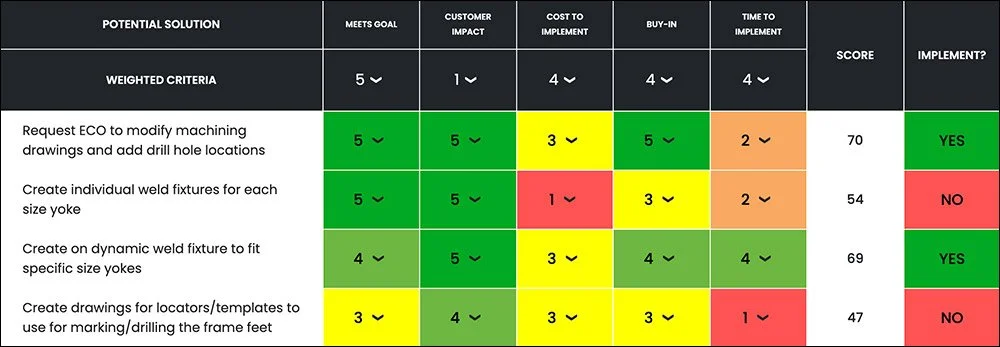
The team developed two targeted solutions to address the root causes.
First, an Engineering Change Order (ECO) was requested to update machining drawings with the required drill hole locations. This allowed drilling to occur during initial machining using a mill head rather than later in production.
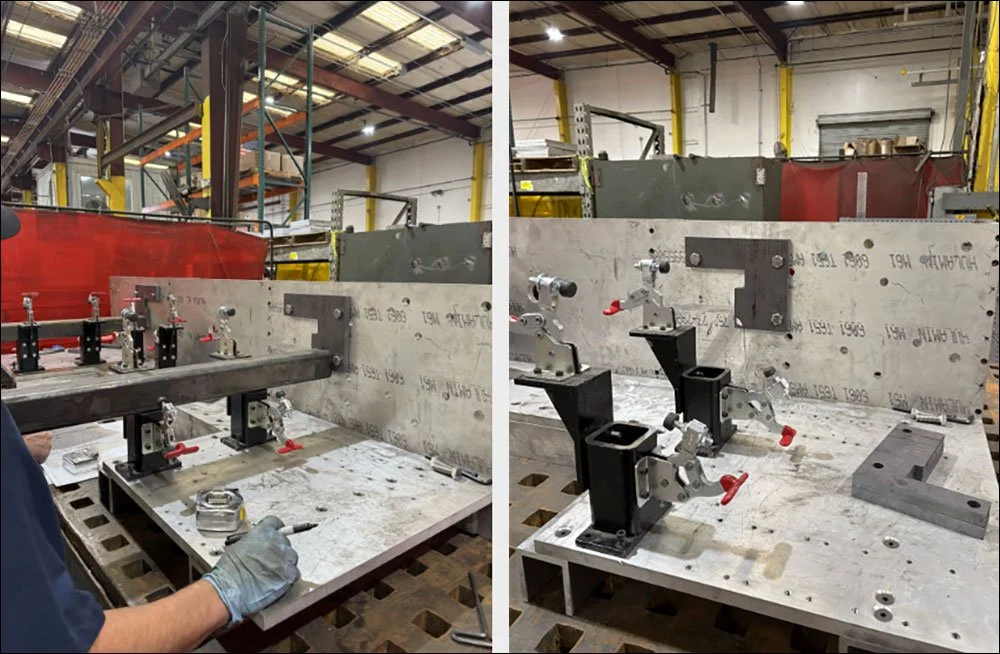
Next, the team designed and implemented a dynamic weld fixture that could accommodate specific yoke sizes. The fixture provided accurate positioning and alignment during welding without requiring gate preassembly.
These changes simplified the fabrication process and reduced dependencies between departments. They also supported Ethical Efficiency by eliminating unnecessary handling, movement, and rework while making better use of employee time, equipment, and manufacturing resources.
The Results
The project produced a significant improvement in average setup time:
Before: 17.6 hours
After: 5.6 hours
Improvement: 68% reduction
The new fixture also made it possible to complete setup and welding activities in less than five hours for gate sizes up to 84" x 84".
By reducing dependencies between yoke fabrication and other machining and assembly activities, the manufacturer eliminated time previously spent preassembling gates and drilling gate components for yoke pedestal plates. Updated engineering drawings also allowed frame drilling to be completed during initial machining.
The benefits extended beyond faster production. Reduced overtime supported more predictable working hours and decreased unnecessary pressure on employees. The streamlined process also improved the use of labor and equipment while increasing scheduling flexibility and supporting more reliable on-time delivery for customers.
Conclusion
With Kure, the manufacturer turned a complex, time-consuming setup process into a faster and more dependable way of working. Kure's structured improvement approach helped the team move from identifying the problem to understanding root causes, implementing solutions, and measuring results.
By reducing average yoke fabrication setup time from 17.6 hours to 5.6 hours, the organization achieved a 68% improvement while reducing unnecessary work and overtime, using resources more effectively, and supporting employees and customers.
The project demonstrates how Kure can help organizations turn improvement opportunities into measurable results while building a foundation for continued operational success.
*We value our clients’ confidentiality. While we’ve changed their names, the results are real.