Oil & Gas Organization Reduced Permit Errors By 92% With Kure
Project Summary
The problem: This oil and gas organization was experiencing recurring Safe Work Permit errors that required permits to be corrected or rewritten, creating delays, consuming employee time, and increasing the potential for safety risks.
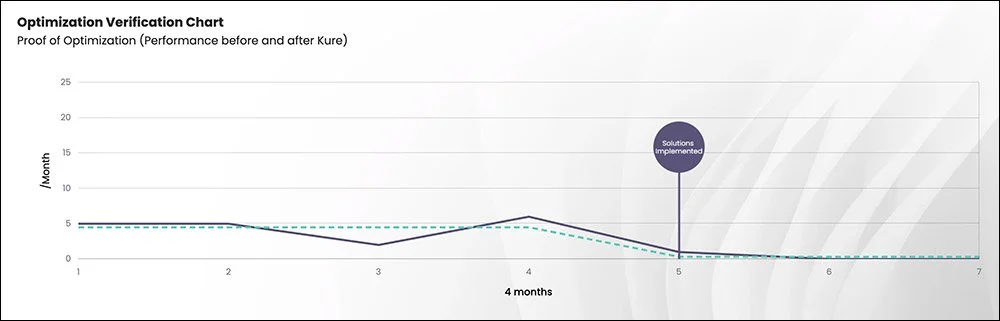
After using Kure to guide a structured improvement project, the organization reduced permit errors from an average of 4.5 per month to just 0.33 per month, an improvement of more than 92%.
Introduction
In the oil and gas industry, consistent processes and accurate documentation are essential for maintaining safe operations. Safe Work Permits help ensure hazards are identified, work is properly authorized, and employees have the information needed to perform tasks safely.
When recurring permit errors began creating unnecessary rework and reducing process reliability, the organization launched a continuous improvement project using Kure. The platform provided a structured framework for documenting the problem, analyzing the causes, organizing solutions, and tracking measurable results from start to finish.
The Root Causes
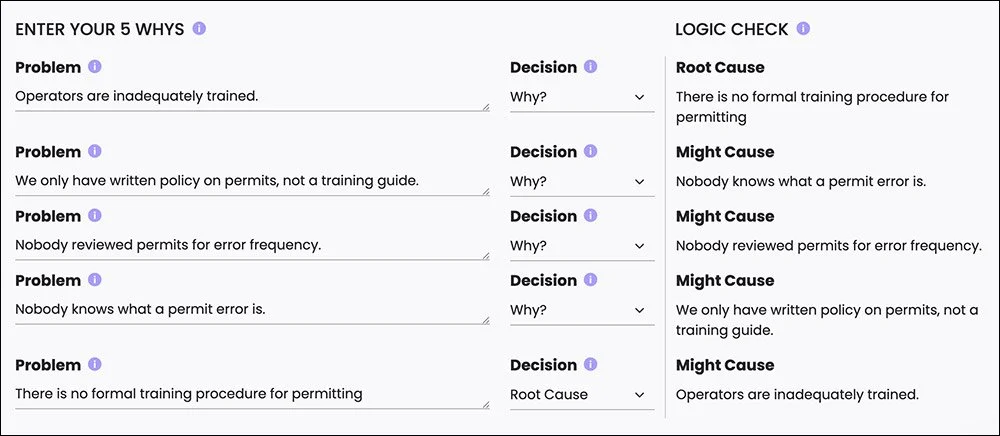
The improvement team identified two primary contributors to the recurring permit errors.
Employees responsible for completing Safe Work Permits had not received formal, standardized training. As a result, different employees completed permits in different ways, increasing variation and creating opportunities for mistakes.
The team also found that employees lacked standardized guidance for identifying and documenting workplace hazards. Without a consistent reference, important information could be missed or recorded inconsistently.
The Solutions
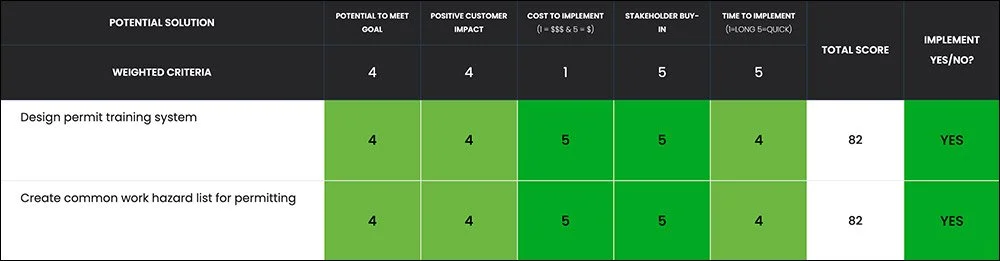
Using Kure to organize and manage the project, the team implemented improvements focused on standardization and consistency.
A comprehensive permit training program was developed to provide every employee with the same instruction on completing Safe Work Permits accurately. This established a common understanding of expectations and reduced variation throughout the process.
The team also created a standardized list of common workplace hazards that employees could reference while preparing permits. This resource helped ensure hazards were identified more consistently and documented before work began.
Throughout the project, Kure enabled the team to document improvements, track implementation progress, and measure results in a single location.
The Results
Before the improvements, the organization averaged 4.5 permit errors per month. After implementing the new process, it recorded only one permit error over the most recent three months, equal to approximately 0.33 errors per month.
This represents a reduction of more than 92% in monthly permit errors.
The improvements also reduced the time spent correcting permits, increased consistency across teams, strengthened compliance with safety requirements, and gave employees greater confidence when preparing critical documentation.
Conclusion
By using Kure to structure and manage its improvement initiative, this oil and gas organization transformed a recurring operational challenge into a sustainable improvement. Standardized training, clearer guidance, and a more consistent permitting process dramatically reduced errors while supporting safer and more efficient operations.
With permit errors reduced by more than 92%, the organization now has a stronger foundation for maintaining process consistency, improving workplace safety, and driving future continuous improvement initiatives. Kure provides a centralized platform for capturing projects, documenting solutions, measuring impact, and building a portfolio of measurable organizational results.
*We value our clients’ confidentiality. While we’ve changed their names, the results are real.