Restaurant Reduced Peak Hour Wait Times By 58% And Increased Revenue By $1.75M With Kure
PROJECT SUMMARY
The problem: A well-loved restaurant in Orlando was facing a major challenge—long wait times during peak hours were frustrating customers, slowing down service, and leading to wasted food. During the busiest times, customers were waiting nearly 8 minutes to receive their meals, which was negatively impacting the dining experience and overall efficiency.
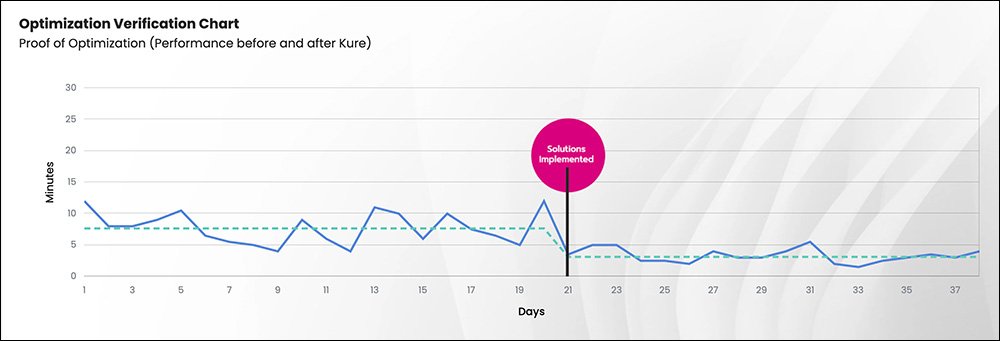
To turn things around, the restaurant leveraged Kure, an AI-powered process improvement software. Kure’s AI-driven workflow provided step-by-step guidance, real-time data analysis, and expert suggestions, helping the team reduce wait times by 58%—from 7.8 minutes down to just 3.3 minutes. This improvement not only enhanced customer satisfaction but boosted revenue by $1.75 million annually.
The Problem
In the restaurant business, speed and quality are everything—especially during peak lunch and dinner hours when demand is at its highest. The longer customers wait, the more likely they are to become frustrated, leave negative reviews, or even choose another dining option in the future. This restaurant was struggling to keep up with demand, leading to multiple issues:
Unhappy Customers: Long wait times reduced satisfaction and repeat visits.
Food Quality Issues: Delayed service meant hot food sometimes arrived lukewarm.
Increased Food Waste: Inefficiencies in food prep led to unnecessary disposal.
Stressed Employees: The chaotic environment caused frustration among staff, making it even harder to serve guests efficiently.
Recognizing the urgency of the problem, the restaurant assembled a team of experienced professionals, led by a project manager utilizing Kure’s AI-powered process improvement software. With Kure’s DMAIC (Define, Measure, Analyze, Improve, Control) approach, the team was able to quickly analyze the situation, identify inefficiencies, and implement targeted solutions—completing the project up to 3 times faster than traditional improvement methods.
The Root Causes
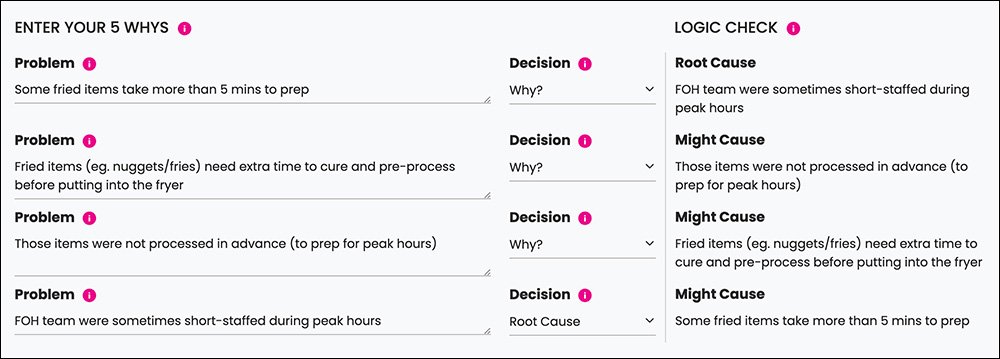
By following Kure’s AI-driven analysis and recommendations, the team uncovered several key reasons behind the delays:
Staffing Shortages During Peak Hours: There weren’t enough front-of-house employees available to handle the busiest times.
Inefficient Scheduling: Work shifts were not aligned with peak demand, causing service slowdowns.
Lack of Standardization: Employees had different methods for assembling orders, leading to inconsistency.
Disorganized Prep Stations: Kitchen supplies, utensils, and ingredients weren’t arranged efficiently, making it harder for staff to work quickly.
The Solutions
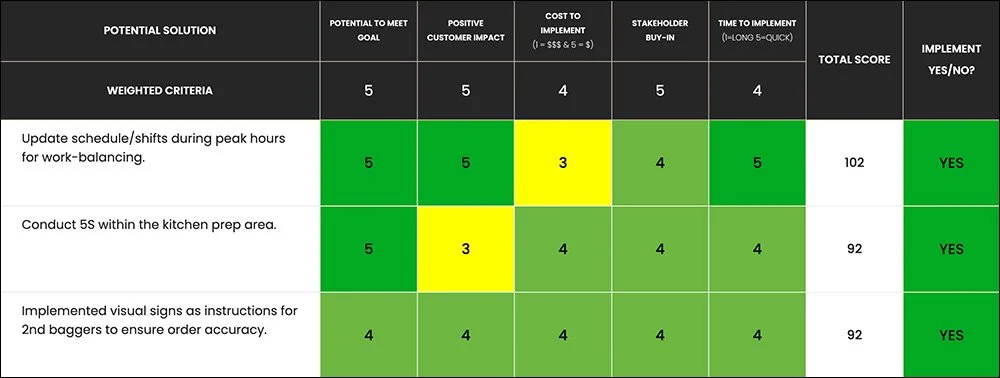
Using Kure’s AI-driven workflow, the team was guided through the process of implementing meaningful improvements. Kure provided real-time examples, AI-generated suggestions, and step-by-step support to ensure the changes were effective and sustainable. The key solutions included:
Optimized Scheduling: The team used Kure’s data-driven insights to adjust shift times, ensuring the right number of employees were available when needed.
Kitchen Organization with 5S: The team implemented a 5S system to create a cleaner, more structured prep area, reducing wasted time during meal assembly.
Consistent Employee Training: With Kure’s expert recommendations, staff were trained to follow a standardized order fulfillment process, increasing efficiency and accuracy.
Clear Visual Aids: New signs and guides were added in key areas to help employees quickly match sauces, utensils, and side dishes to each order.
The Results
The impact of these changes was immediate and transformative:
Faster Service: Customer wait times dropped from 7.8 minutes to 3.3 minutes–a 58% improvement.
Higher Food Quality: Meals arrived fresh and at the perfect temperature, improving the dining experience.
Reduced Food Waste: More efficient processes meant less food was thrown away, saving money.
Happier Employees: A more structured workflow reduced stress, making work easier and more enjoyable.
$1.75 Million in Additional Revenue: With faster service, the restaurant could serve more customers, significantly increasing profits.
Conclusion
This project demonstrated the power of AI-driven process improvement in transforming restaurant operations. By leveraging Kure’s intelligent workflow, AI-powered analysis, and real-time guidance, the team was able to complete their project 3 times faster than traditional approaches—achieving significant and lasting improvements.
With Kure’s AI-driven approach, the restaurant not only increased efficiency but also enhanced customer satisfaction and boosted revenue. Now, they are well-positioned for continued success, offering faster service, better food quality, and a smoother dining experience for their guests.
*We value our clients’ confidentiality. While we’ve changed their names, the results are real.