Tape Manufacturer Reduced Tape Breaks By 30% With Kure
Project Summary
The problem: A manufacturing organization was experiencing frequent tape breaks that created costly scrap, machine downtime, and production disruptions.
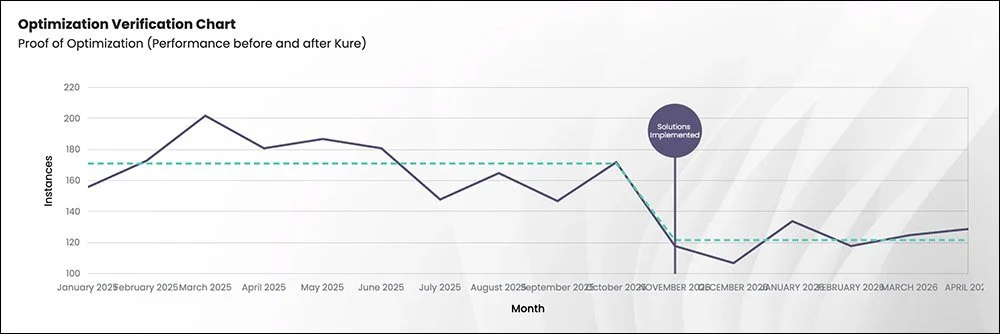
Using Kure, the organization reduced tape breaks from an average of 173 to 122 instances per million pounds produced, a 30% improvement that increased production stability and efficiency.
Introduction
In manufacturing, consistent production is essential for controlling costs, maintaining quality, and meeting customer demand. Even brief interruptions can create significant waste, reduce equipment availability, and make it more difficult for teams to achieve production goals.
To address recurring tape breaks, the organization turned to Kure to guide its improvement project. Kure provided a structured, AI-powered approach that helped the project team work through the improvement process, investigate potential causes, and identify practical solutions.
The project also reflected the principles of Ethical Efficiency™, by looking beyond speed and cost savings. The team focused on reducing unnecessary material waste, using equipment and resources more effectively, and creating clearer processes that helped employees respond confidently when production issues occurred.
The Problem
The organization was experiencing a high number of tape breaks during production. Each break interrupted operations, generated startup scrap, and reduced valuable machine availability.
Between May and October, tape breaks contributed to $315,075 in startup scrap and approximately $335,500 in lost machine-hour value. Beyond the financial impact, frequent interruptions disrupted production flow and made the manufacturing process less predictable.
Reducing tape breaks was therefore an important opportunity to lower waste, improve productivity, strengthen quality, and create a more reliable operation.
The Root Causes
Using Kure to support the improvement process, the project team investigated why tape breaks were occurring so frequently.
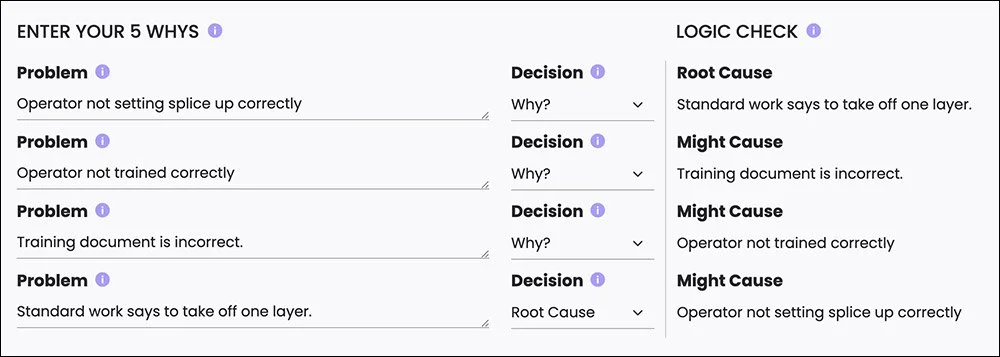
The analysis identified poor roll geometry as a primary contributor. When rolls were not formed consistently, tension issues and instability could develop during production, increasing the likelihood of a tape break.
The team also uncovered opportunities to improve equipment consistency, strengthen operator responses, and standardize key parts of the process. Addressing these factors would help prevent problems before they resulted in additional scrap and downtime.
The Solutions
The team implemented several targeted improvements based on the root causes identified during the project.
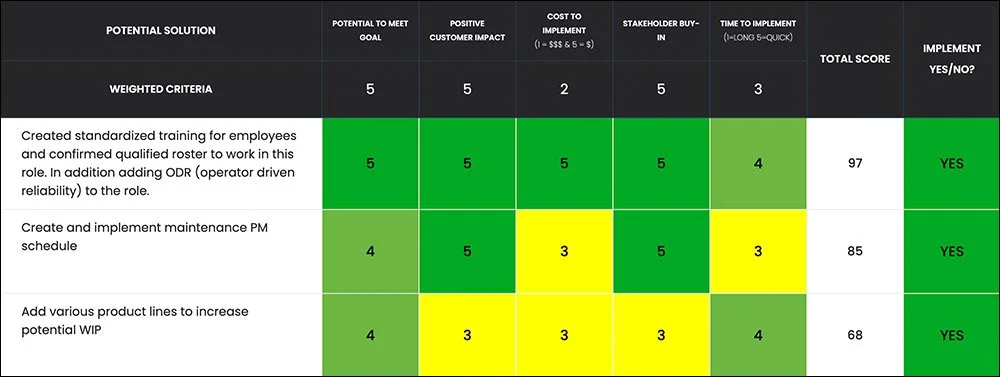
A new process for lay-on rollers was developed to improve consistency, while existing lay-on arm rollers were replaced to strengthen equipment performance and reliability. The team also established clear quality specifications for roll geometry so rolls could meet consistent standards before entering production.
Employees were provided with a standardized response guide for abnormal production conditions, helping them address issues more quickly and consistently. Quarterly retraining on splice setup procedures was introduced, and splice pad gaps were standardized to further reduce process variation.
Together, these solutions created a more controlled production process while supporting Ethical Efficiency through reduced waste, better use of resources, and clearer guidance for employees.
The Results
The organization successfully reduced tape breaks from an average of 173 instances per million pounds produced to 122, representing a 30% improvement.
The results surpassed the organization's goal of 130 or fewer tape breaks per million pounds produced.
Fewer tape breaks meant less startup scrap, better machine utilization, and fewer interruptions to production. The improvements also helped reduce the financial impact associated with wasted materials and lost machine time.
The benefits extended beyond operational performance. Employees gained clearer procedures for responding to abnormal conditions, resources were used more responsibly, and customers benefited from a more stable and reliable production process.
Conclusion
With Kure guiding the improvement journey, the manufacturing organization transformed a costly production challenge into an opportunity for lasting improvement. The project addressed the underlying causes of tape breaks while introducing practical solutions that improved consistency, reduced waste, and strengthened production reliability.
Kure’s AI-powered, structured approach helped the team move through the improvement process efficiently and turn insights into action. Combined with the principles of Ethical Efficiency™, the project demonstrated how organizations can achieve measurable business results while improving the way employees, equipment, and resources are supported.
By reducing tape breaks by 30% and exceeding its performance target, the organization established a stronger, more sustainable process and a foundation for continued improvement across its manufacturing operations.
*We value our clients’ confidentiality. While we’ve changed their names, the results are real.