Medical Supply Manufacturer Reduced Tube Assembly Cycle Time By 25% With Kure
Project Summary
The problem: A medical supply manufacturer was challenged by an inefficient tubing assembly process that limited production capacity, increased labor demands, and made it difficult to achieve daily output goals.
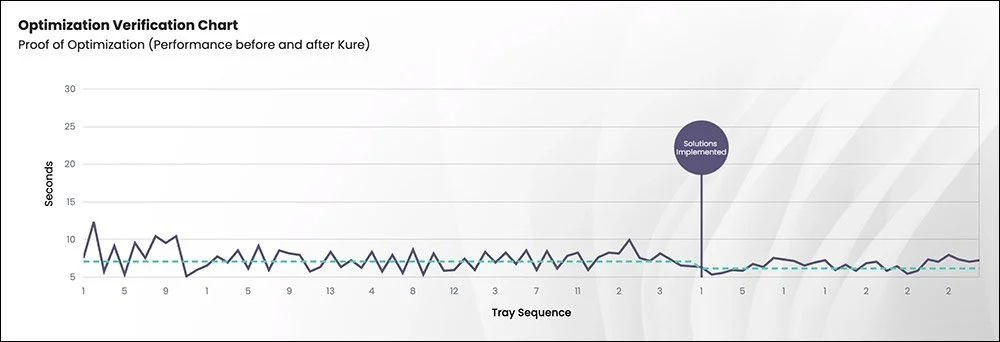
After using Kure to improve the process, the organization reduced manual assembly cycle time from 8.4 seconds to 6.3 seconds, a 25% reduction, while increasing production throughput by 33%, bringing output much closer to its goal of 4,000 units per operator per shift.
Introduction
In medical manufacturing, efficient production is essential to delivering critical products when healthcare providers need them most. Small process delays can quickly reduce output, increase operating costs, and place additional pressure on production teams.
To improve the performance of its tubing assembly operation, a medical supply manufacturer used Kure, the AI-powered continuous improvement platform, to guide its improvement initiative. By documenting the process, organizing improvement work, and collaborating in one centralized workspace, the team was able to identify inefficiencies, evaluate solutions, and implement meaningful changes more efficiently. Guided by the principles of Ethical Efficiency™, the project focused on eliminating unnecessary work while making the process easier and more effective for employees.
The Problem
The tubing assembly process consistently fell short of production expectations. Operators averaged approximately 3,000 units per shift, well below the organization's goal of 4,000 units. Manual assembly required an average cycle time of 8.4 seconds per unit, creating a bottleneck that limited overall throughput.
As customer demand continued to increase, the organization relied more heavily on overtime and additional labor to meet production needs. While this helped address short-term demand, it also increased costs and placed greater strain on employees.
The team recognized that hiring more workers would not solve the underlying process issues. A more efficient workflow was needed to increase production capacity while maintaining quality and controlling labor costs.
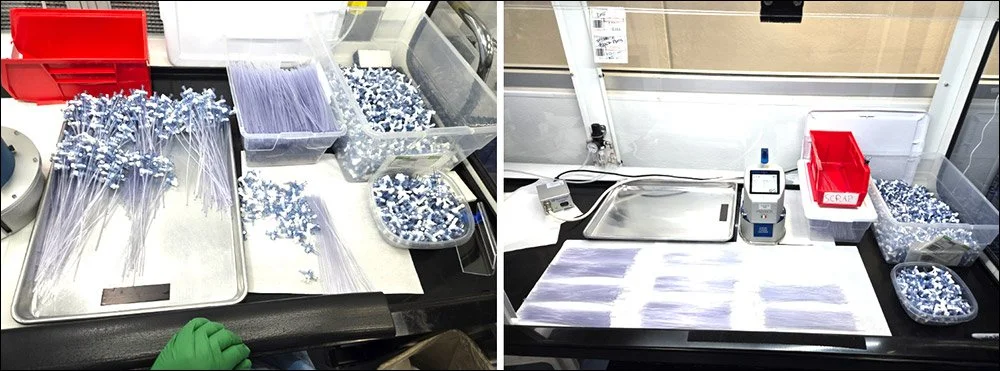
Before
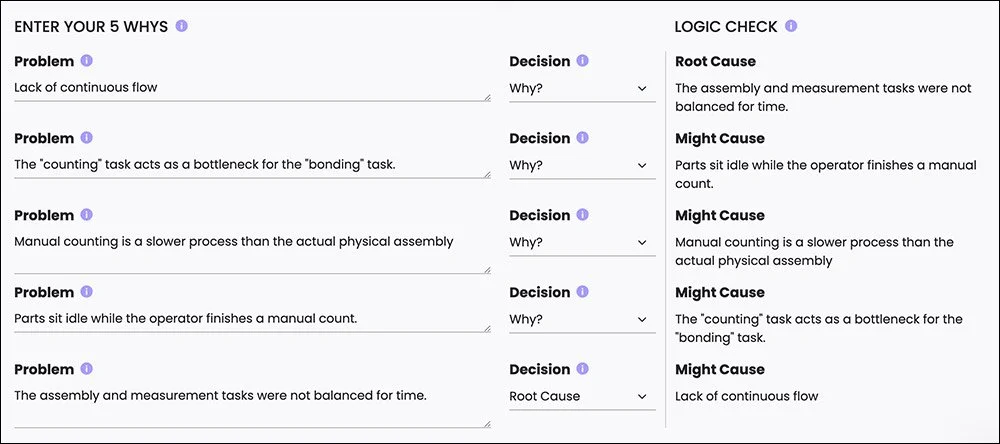
The Root Causes
Using Kure to document the current process and organize improvement findings, the team identified several key contributors to the production gap.
One of the largest sources of wasted time was manual counting during assembly. Operators counted parts even though quantities were already verified later during packaging using precision scales. This duplicate activity added more than 17 minutes of non-value-added work to every production batch.
The team also identified workflow interruptions caused by manual counting and tray loading, which prevented operators from maintaining a consistent production rhythm. In addition, the process relied heavily on manual verification methods that were less efficient than weight-based measurement for a high-volume manufacturing environment.
The Solutions
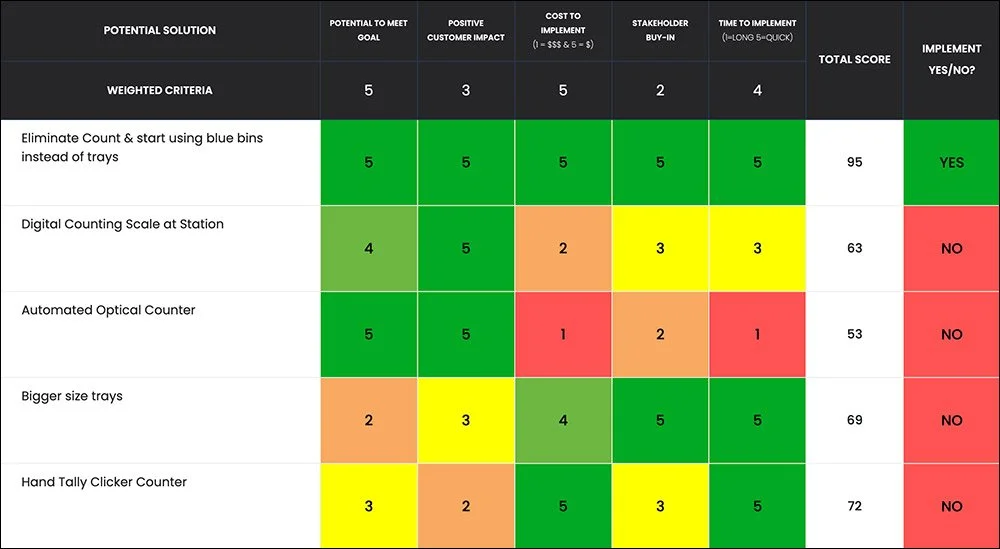
With Kure serving as the team's centralized improvement platform, the project team documented ideas, tracked implementation, and standardized the new process.
The most significant improvement eliminated manual counting during assembly. A new bulk-handling Blue Bin system allowed operators to access materials with fewer interruptions while shifting quantity verification to end-of-shift precision scale weighing. This maintained counting accuracy while removing unnecessary work from the production process.
The team also eliminated tray loading activities that created additional handling and slowed production. These changes allowed operators to spend more time assembling products and less time performing administrative or non-value-added tasks.
Because the improvements were simple and low cost, they were implemented quickly without requiring additional equipment or staffing.
The Results
The project delivered measurable improvements in both efficiency and production performance.
Manual Assembly Cycle Time
Before: 8.4 seconds
After: 6.3 seconds
Improvement: 25% reduction
Production Throughput
Before: Approximately 3,000 units per operator per shift
After: Progress toward 4,000 units per operator per shift
Improvement: 33% increase
In addition to these measurable gains, the organization reduced overtime requirements, avoided additional labor costs, created a smoother production workflow, and improved its ability to meet customer demand.
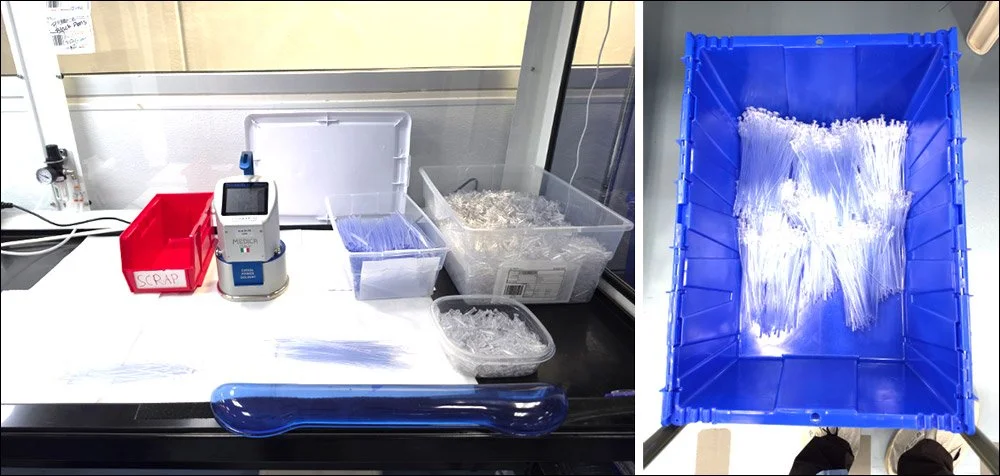
After
Conclusion
This project demonstrates how Kure helps organizations transform improvement opportunities into measurable operational results. By bringing process documentation, collaboration, project management, and improvement tracking together in a single platform, the team was able to quickly identify waste, implement practical solutions, and sustain improvements.
Guided by the principles of Ethical Efficiency™, the project focused on removing unnecessary work instead of increasing employee workload, creating benefits for both the organization and its workforce. With a faster, more scalable tubing assembly process now in place, the manufacturer is better positioned to increase production capacity, respond to growing customer demand, and continue building a culture of continuous improvement with Kure.
*We value our clients’ confidentiality. While we’ve changed their names, the results are real.